
Memory Card
Concentration with a move counter that decides your rank and a clock that mostly does not
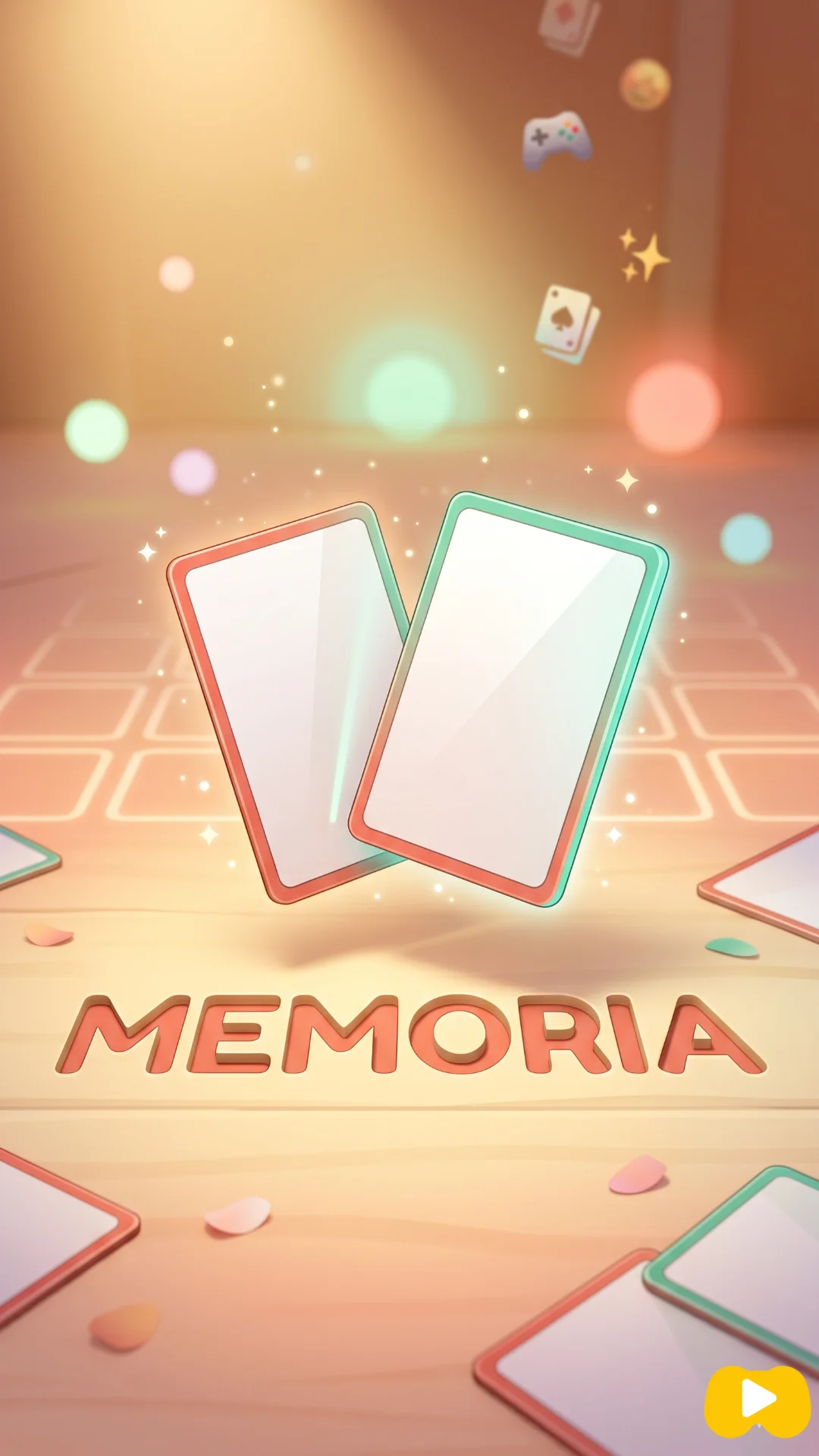
About Memory Card
Cards face down, two turns per go, matches stay up. Everyone knows the game; what a version of it actually lives or dies on is how it counts. Here the header shows moves and elapsed time, and your best run for each board size is stored on the device — ranked by moves first, with time used only to break a tie. That settles the question of whether to rush: there is nothing to gain by flipping before you have read what is in front of you.
Three sizes, twelve, sixteen or eighteen cards, with emoji faces and a soft flip animation. Finishing inside par earns three stars, within half again as many moves earns two, anything beyond that earns one. Par works out at three moves per pair: generous enough to allow roughly one blind turn per pair, tight enough that a couple of careless repeats cost the third star. Your best run on each size is remembered, so the board you pick becomes a small personal record rather than a one-off.
What is different about this version
The grid is not a fixed shape. On every resize the board works through the ways the card count can be divided and takes whichever arrangement gives the largest cards in the space available, so the same twelve-card deck can sit as four columns in portrait and six in landscape. The cards keep their pairings when that happens, but they do not keep their positions — turn a phone sideways in the middle of a run and everything you had memorised as being in the top corner is somewhere else. It is worth knowing about before it happens to you. The mismatch delay is deliberately unhurried too: a wrong pair sits visible for the best part of a second, because the alternative punishes slow readers rather than poor memories.
How to play Memory Card
- Tap a card to turn it over, then a second one.
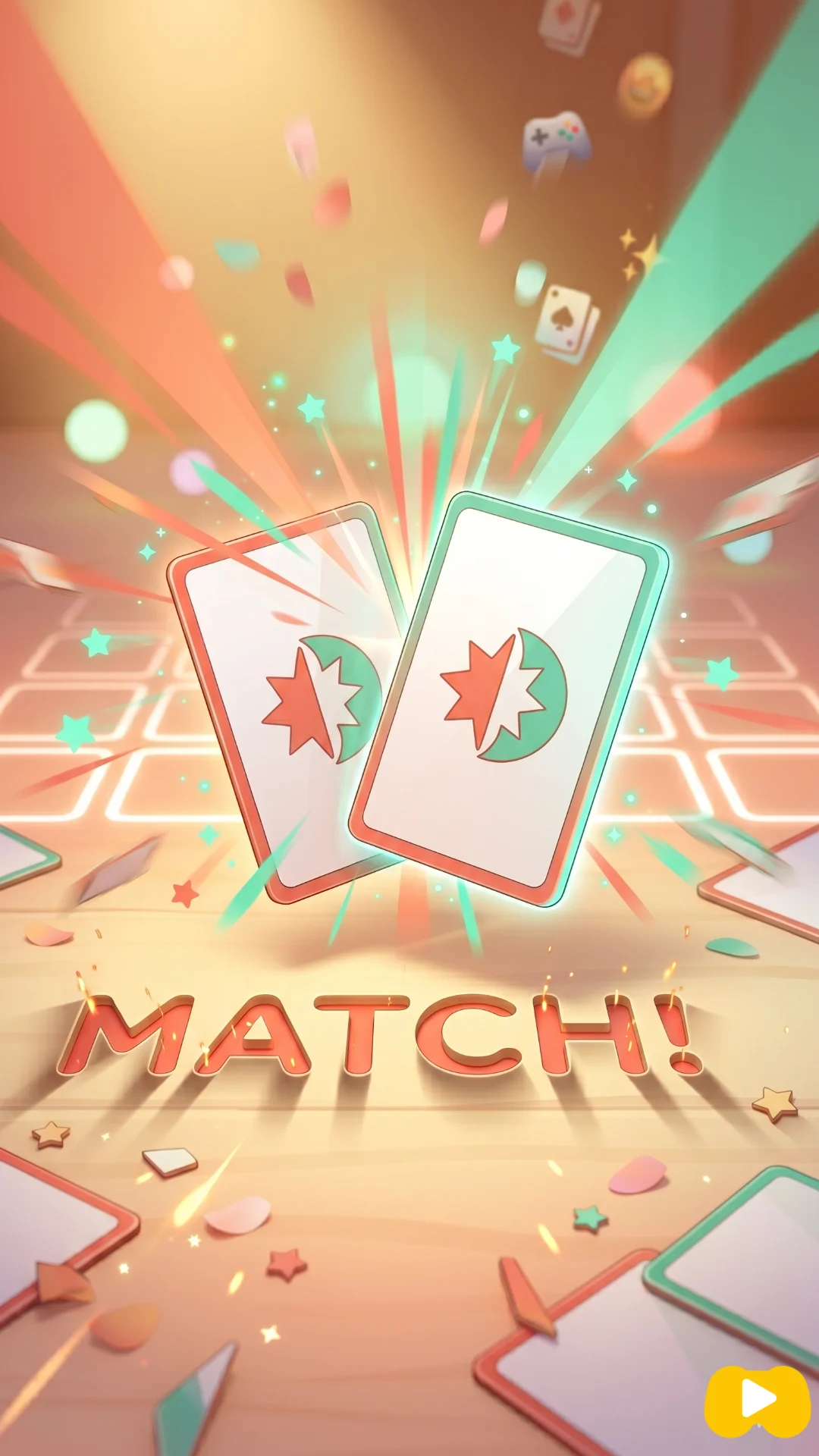
- A pair stays face up. A mismatch shows for about a second, then both flip back.
- Every two cards you turn counts as one move — that number is what you are scored on.
- Clear the board and see how many stars the move count earns.
Controls
| Desktop | Click a card to flip it, or move the focus box with the arrow keys and press Enter. |
|---|---|
| Phone or tablet | Tap a card to flip it. |
| Players | One player. Any other characters on screen are run by the game. |
Strategy
Concentration rewards discipline more than recall, and the discipline is this: once you know where a pair is, take it. The temptation after turning up a card you have already seen is to spend the second flip somewhere new, harvesting information. It feels efficient and it is not. Every card you clear is one fewer position to hold in your head, and the memory load is what eventually breaks — not the eyesight.
The move budget explains why. Par is three moves per pair, which means one exploratory turn per pair plus the turn that takes it. Spend two blind turns hunting when you already had a known match and you have used the whole allowance on one pair. On the smallest board that is survivable; on eighteen cards a few of those and the third star has gone.
Encode position rather than sequence. Most people can recall the fourth card they turned over far less reliably than they can recall that the pineapple was second from the left on the bottom row. Working across the board in a fixed order, left to right and down, gives every card an address, which is much easier to hold than the order you happened to find things in.
One more habit worth building: when a mismatch flips back, do not immediately reach for the next card. The second or so it stays visible is the only look you get, and using all of it costs nothing at all on a scoreboard that counts moves.
Mistakes that cost you the game
- Chasing new cards when you already know a match is sitting there. It costs a move now and costs memory later.
- Flipping the second card before you have taken in the first. There is no time pressure worth beating.
Tips
- Say the symbol and its position under your breath. Naming a card sticks better than looking at it.
- Start in a corner and sweep. Random flipping produces memories with no addresses attached.
- Set the screen the way you want it before you begin, since the board reshapes if you rotate the device mid-run.
Questions about Memory Card
What do the stars mean?
Three for finishing within par, two for within half as many moves again, one for anything longer. Par is three moves per pair.
Does the timer affect my score?
Only as a tiebreak. A best run is decided on moves, and the clock separates two runs that used the same number.
Is the hard board much harder?
It is nine pairs against six on the easy one. That is a longer chain to hold, though it is a short game either way.
Does it cost anything?
No. Memory Card is free to play, runs in your browser, and needs no download, install or account.
More games like this
-
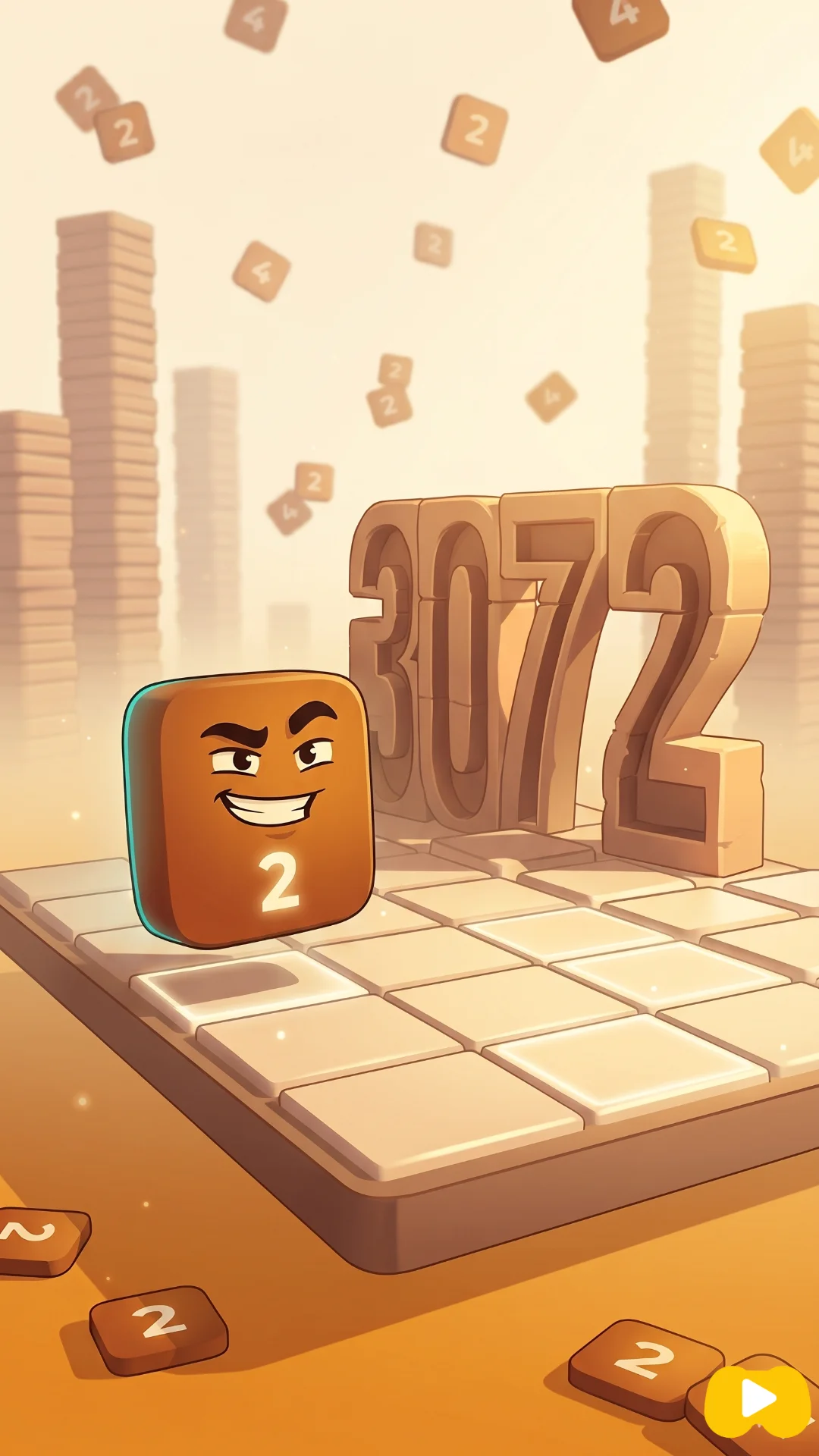 3072 MergeSlide a 4x4 grid, fuse matching tiles, and try to build the 3072
-
 Fruit BlastMatch-three against a clock, a score target and a board full of blocks that will not move
-
 Memory NumberA number flashes, then vanishes. Type it back. One mistake ends the run
-
 Paint & HidePaint yourself to match the wall before the seeker walks past