
Memory Number
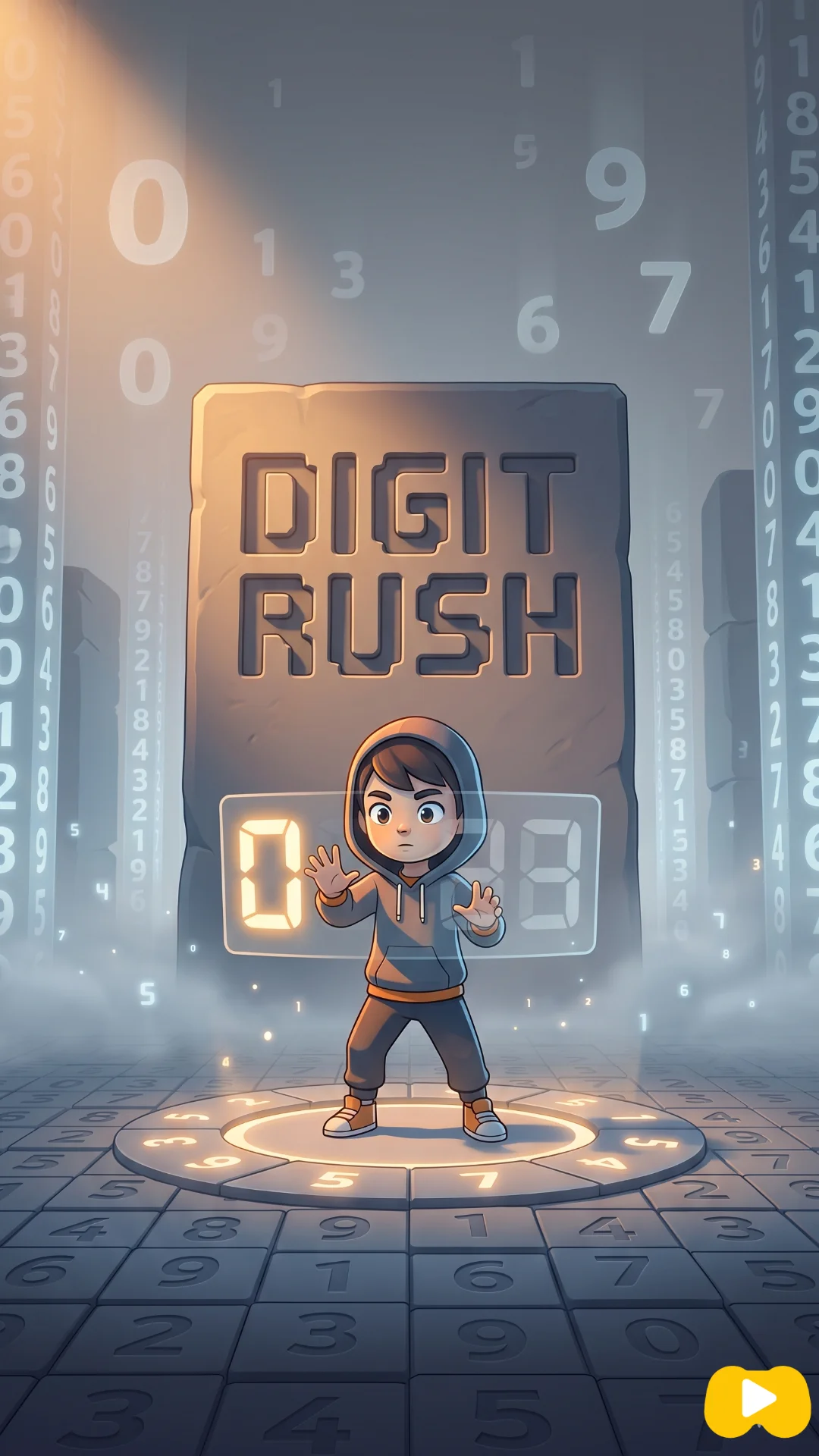
A number flashes, then vanishes. Type it back. One mistake ends the run
About Memory Number
A digit-span test with a scoreboard attached. Level one shows you a three-digit number for three and a half seconds, then hides it and asks you to type it back on a keypad. Get it right and the next number is longer and stays on screen for a shorter time. Get it wrong and the run is over — there are no lives, no second attempts and no way back.
The curve is steeper than it looks. The number grows by roughly four digits every five levels while the display time drops by a tenth of a second each level, so the seconds you get per digit collapse quickly: a little over one second per digit at the start, about a quarter of that by level ten, and a twentieth by level twenty. The length caps at twenty digits and the display time bottoms out at six-tenths of a second, which is where most runs finish.
Typing is untimed, which is the one piece of mercy in the design. All the difficulty lives in the flash.
What is different about this version
Two decisions shape this more than anything else. The input phase has no timer at all, so the game never punishes slow typing — every point of difficulty is concentrated into the flash itself, and you can sit and rehearse for as long as you like before touching a key. And the confirm key will not activate until you have entered exactly as many digits as were shown, which quietly rules out the panic answer where you submit six digits for an eight-digit number. Scoring is weighted towards depth rather than volume: each level is worth ten points per level reached, with a bonus every fifth level, so level twenty alone is worth more than levels one to ten combined.
How to play Memory Number
- Watch the number while the bar underneath it runs down.
- When it disappears, type it back on the keypad. There is no clock on this part.
- Press the confirm key once you have filled every slot; it stays disabled until the length matches.
- A correct answer moves you up a level and adds to your score. A wrong one ends the run.
Controls
| Desktop | Type the digits on your keyboard or click the on-screen keypad; backspace and clear are both available. |
|---|---|
| Phone or tablet | Tap the keypad, using the arrow key to delete a digit and the cross to clear the lot. |
| Players | One player. Any other characters on screen are run by the game. |
Strategy
Chunk, do not read. Seven separate digits sit right at the edge of what most people can hold; the same seven split into two-and-two-and-three is comfortably inside it. The moment the number appears, stop reading it as a string and start hearing it as two or three small numbers — eighty-four, sixteen, five hundred and two. Rehearsing that out loud, or under your breath, is what keeps it alive while you type, and the game gives you unlimited time to do exactly that.
The slots fill left to right, which has a real consequence. Your memory of the first digits is the sturdiest and your memory of the last is the freshest, but the last digits have to survive the longest before you get to enter them. So spend your rehearsal effort on the tail. A common pattern in a failed round is typing the opening five digits perfectly and losing the final two, and the fix is to say the ending twice while the number is still on screen rather than reading the whole thing evenly.
From around level fifteen the display time is under two seconds for fifteen digits or more, and reading them in order stops working. What works there is taking a picture of the shape — three groups, the middle one round, the last one ending on a double — and reconstructing from that. It is a different skill from the one the early levels teach, and it is where a run either doubles or stops.
Mistakes that cost you the game
- Re-reading the number two or three times instead of chunking it once and rehearsing. The second read costs you the time you needed for the tail.
- Starting to type the instant the number disappears. There is no clock on the input phase, so the rush buys nothing and loses the ending.
Tips
- Say the number under your breath while it is showing. Sound holds digits better than sight does.
- Break it into groups of two or three and give the last group an extra repetition.
- Use backspace freely — a corrected digit costs nothing, an unconfirmed guess ends the run.
- On a laptop, type on the number row rather than clicking; the keypad is there for touch.
Questions about Memory Number
How many levels are there?
It carries on until you get one wrong. The number length stops growing at twenty digits and the display time stops shrinking at six-tenths of a second, so the top of the game is a fixed, very hard round repeated.
Do I get more than one attempt?
No. A single wrong answer ends the run, which is why it is worth taking your time over the typing.
Is the typing timed?
Not at all. Only the flash is timed.
Does it cost anything?
No. Memory Number is free to play, runs in your browser, and needs no download, install or account.
More games like this
-
 Memory CardConcentration with a move counter that decides your rank and a clock that mostly does not
-
 3072 MergeSlide a 4x4 grid, fuse matching tiles, and try to build the 3072
-
 Atlas GlobeTen places, one spinning world, and your score measured in kilometres of error
-
 Balance ScalesA beam, a hidden shape and a tray of weights, with one arrangement that sits level