
Balance Scales
A beam, a hidden shape and a tray of weights, with one arrangement that sits level
About Balance Scales
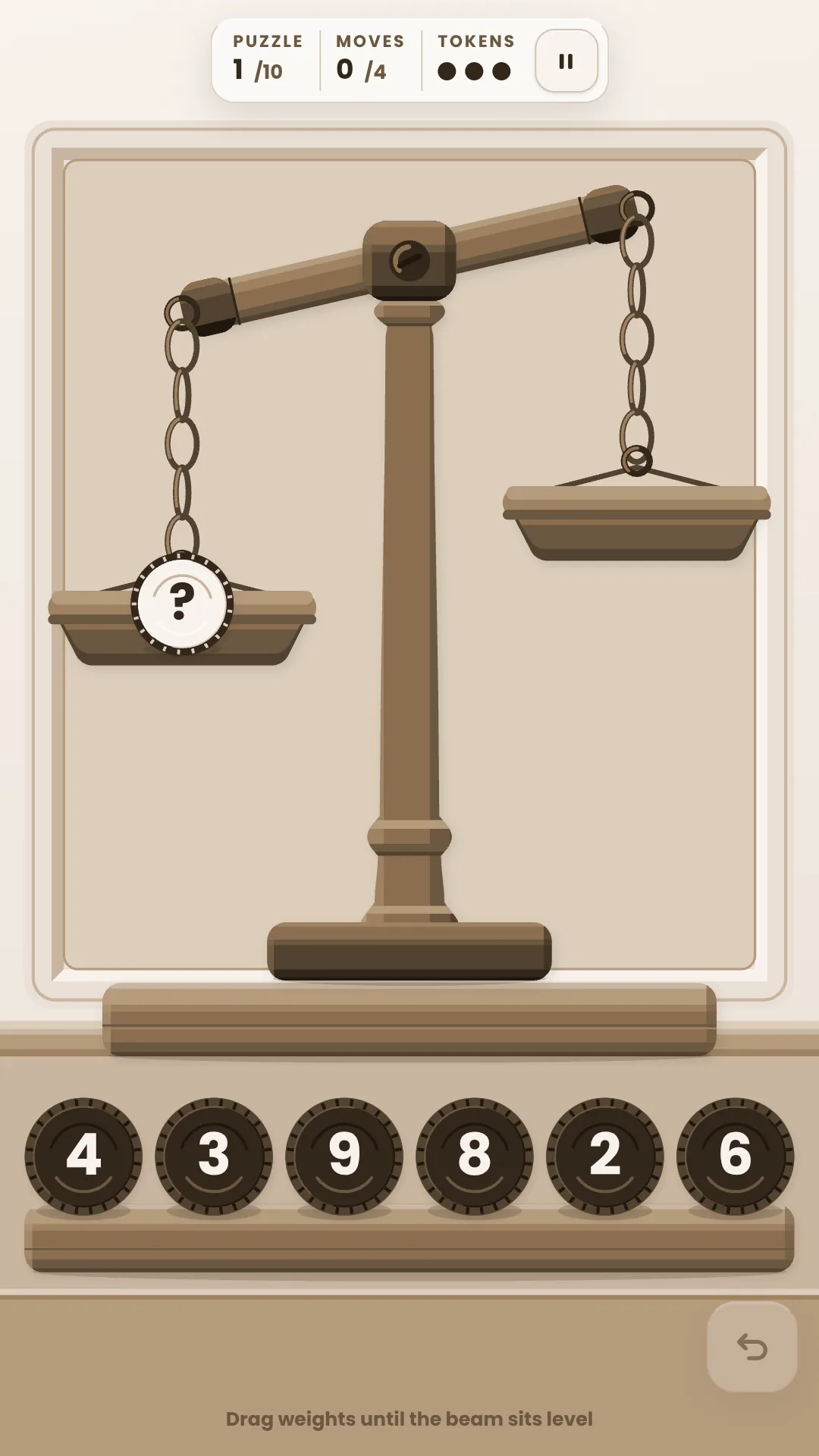
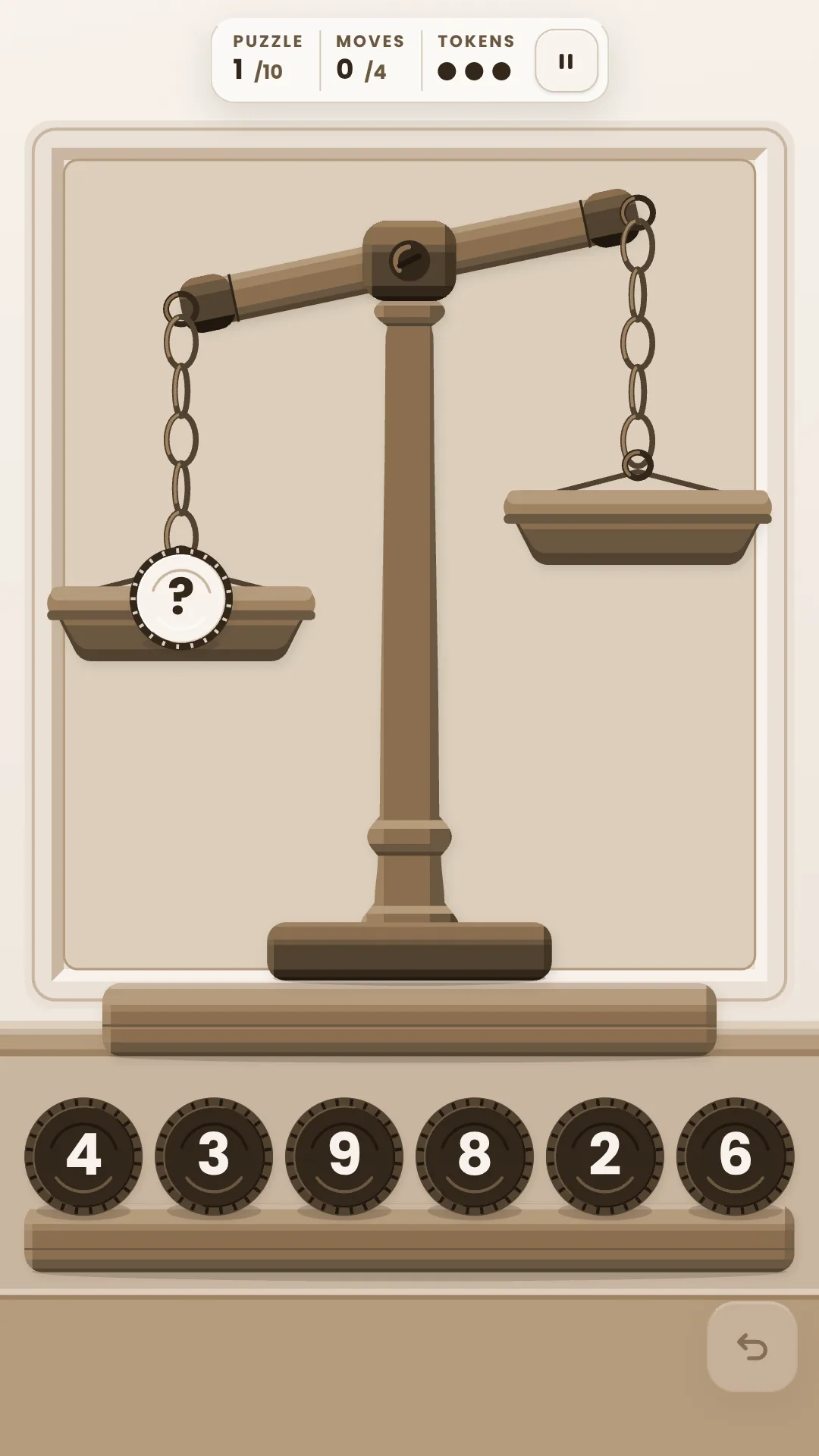
A wooden beam balance stands in the middle of the bench. The left pan is already loaded: some numbered discs you can read, and one or more copies of a mystery shape whose value you do not know. The right pan is yours, and a tray of six discs numbered between one and ten sits below. Drag discs onto the right pan until the beam sits level.
There is no text telling you whether you are close. The beam tilts live as each disc lands, settling on a damped spring, and that tilt is the entire feedback system. Too heavy and it swings your way; too light and it stays down on the left. When the two sides match, the beam locks level and the mystery shape fills in solid with its number, which is the moment you learn what it was worth all along.
Later puzzles put the same shape on both pans, so you are subtracting rather than adding, and stack two or three copies on one side, so the answer comes out of a division. The shape never changes meaning inside a puzzle and the left pan never moves.
Ten puzzles wins the run. Each one shows a move budget and you hold three tokens. Going over budget costs a token when that puzzle finally balances, and running out of tokens ends the run. Nothing else can end it: there is no timer, taking a disc back costs nothing, and no puzzle can be failed outright.
What is different about this version
Every puzzle is built from a value rather than searched for one. The game picks the mystery shape's number first, builds both pans from it, works out what the right pan still needs, and then chooses a subset of discs that sums to exactly that. Before the puzzle is ever drawn, all sixty-three subsets of the six-disc tray are brute-forced and the puzzle is thrown away unless exactly one of them balances the beam. A second solution is not a bonus, it is a rejection, because two answers would make the move budget meaningless. Solution size is capped against the budget as well, so a Normal puzzle never needs more than three discs and a Hard one never more than two. The budget itself is what difficulty changes: five moves on Easy with a shape worth at most six, four on Normal with a shape worth up to ten, three on Hard with up to three copies of the shape on the left pan and one on the right.
How to play Balance Scales
- Drag a disc from the tray onto the right pan, or tap the disc and then tap the pan.
- Watch the beam. It tilts toward whichever pan is heavier and settles rather than snapping.
- Tap a disc you have already placed to send it back to the tray. That is free, though the move stays spent.
- Work out what the mystery shape is worth from the discs already on the left pan.
- Level the beam and the shape fills in with its value, then the next puzzle slides in.
- Solve ten puzzles to win. Overspending the move budget costs one of three tokens.
Controls
| Desktop | Click and drag a disc from the tray to the right pan, or click the disc and then click the pan. Click or right-click a placed disc to return it. Z or Backspace undoes the last placement, and Escape or P pauses. |
|---|---|
| Phone or tablet | Drag a disc to the pan or tap it and then tap the pan; tap a placed disc to send it back. An undo button sits in the bottom-right corner. |
| Players | One player. Any other characters on screen are run by the game. |
Strategy
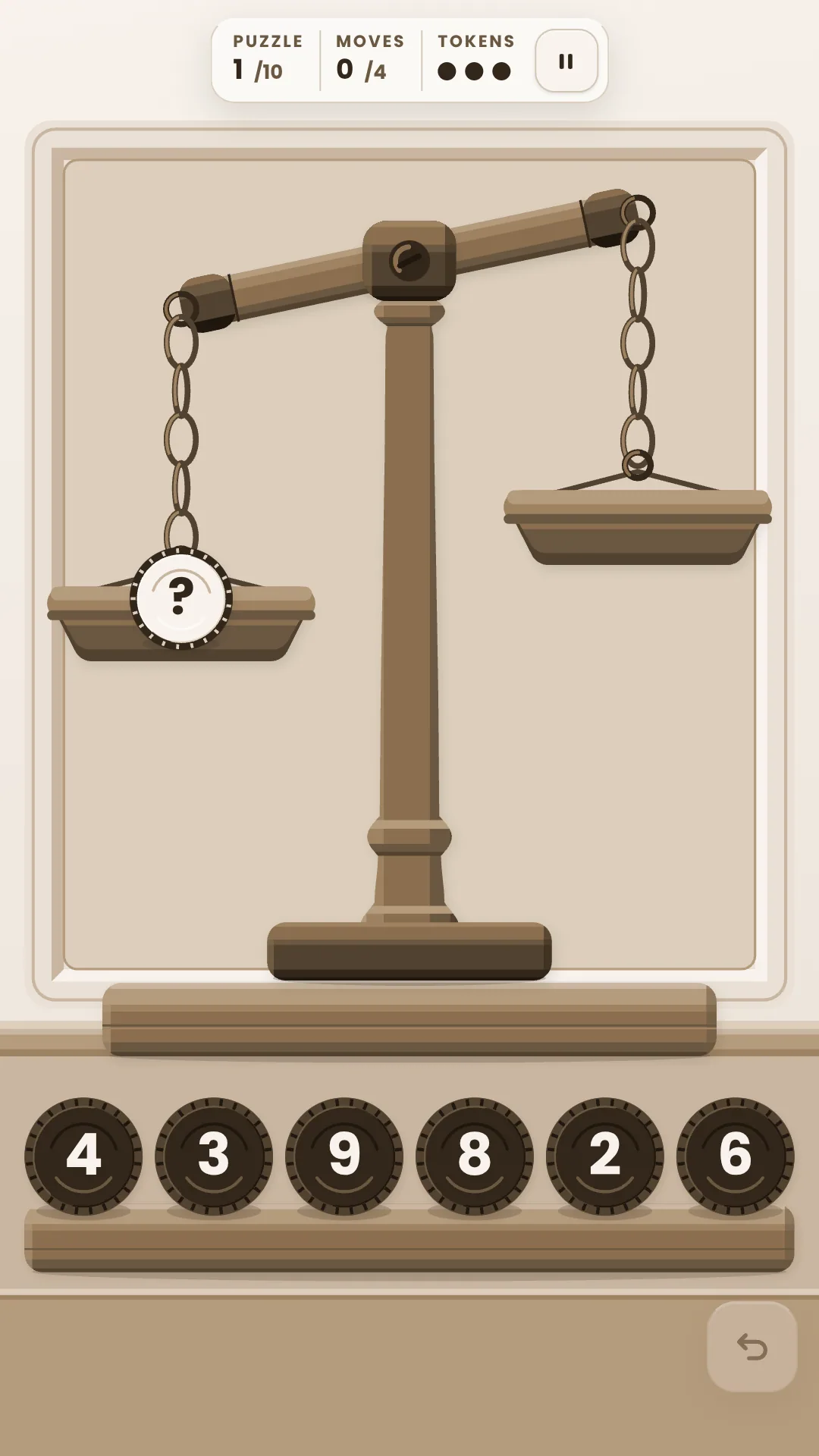
Read the left pan as an equation before you touch the tray. Count the mystery copies on each side first, because two on the left and one on the right cancel down to one, and three on the left with a known disc means the difference you need is divisible by three more often than not. Once you know what the right pan owes, look at the tray for the cleanest way to make it rather than the first disc that fits, since every placement spends a move whether or not you take it back afterwards. The temptation on a tight Hard budget is to drop a large disc and adjust, but the tray is built so that exactly one subset works, which means a guess that overshoots almost never becomes the answer by subtraction. When you genuinely cannot see it, place the single disc that would balance if the shape were worth one and read how far the beam misses, then correct once.
Mistakes that cost you the game
- Placing a disc to see what happens. A placement is a move even if you immediately take it back.
- Treating the beam as a hint system. It tells you the direction, not the amount, and each reading costs a move.
- Forgetting the mystery copies on the right pan. Those subtract, so the difference you owe is smaller than the left pan looks.
- Chasing a second answer. Exactly one subset of the tray balances, so if two discs nearly work, neither is it.
- Ignoring the budget counter until it turns over. The token is spent when the puzzle resolves, not when you go over.
Tips
- Count the shapes on both pans before you count the numbers.
- Multiple copies of the shape on one side means the answer divides evenly; that narrows it fast.
- Undo with Z on a keyboard, or the corner button on a phone, when a placement was clearly wrong.
- Hard gives three moves and never needs more than two discs, so a three-disc plan is already wrong.
- Best is measured in fewest total moves, so a clean run matters more than a fast one.
Questions about Balance Scales
Can a puzzle have more than one solution?
No. Every tray is brute-forced over all its subsets and the puzzle is discarded unless exactly one of them balances the beam.
Does taking a disc back cost anything?
Nothing is charged for returning a disc, but the placement that put it there has already counted against the budget.
What happens when I go over the move budget?
The puzzle stays solvable and you keep working on it. A token is spent at the moment it balances, and losing all three tokens ends the run after that puzzle resolves.
What changes on Hard?
The budget drops to three moves and the puzzles stack up to three copies of the mystery shape on the left pan with one on the right, so most answers come out of a subtraction and a division rather than a sum.
Does it cost anything?
No. Balance Scales is free to play, runs in your browser, and needs no download, install or account.
More games like this
-
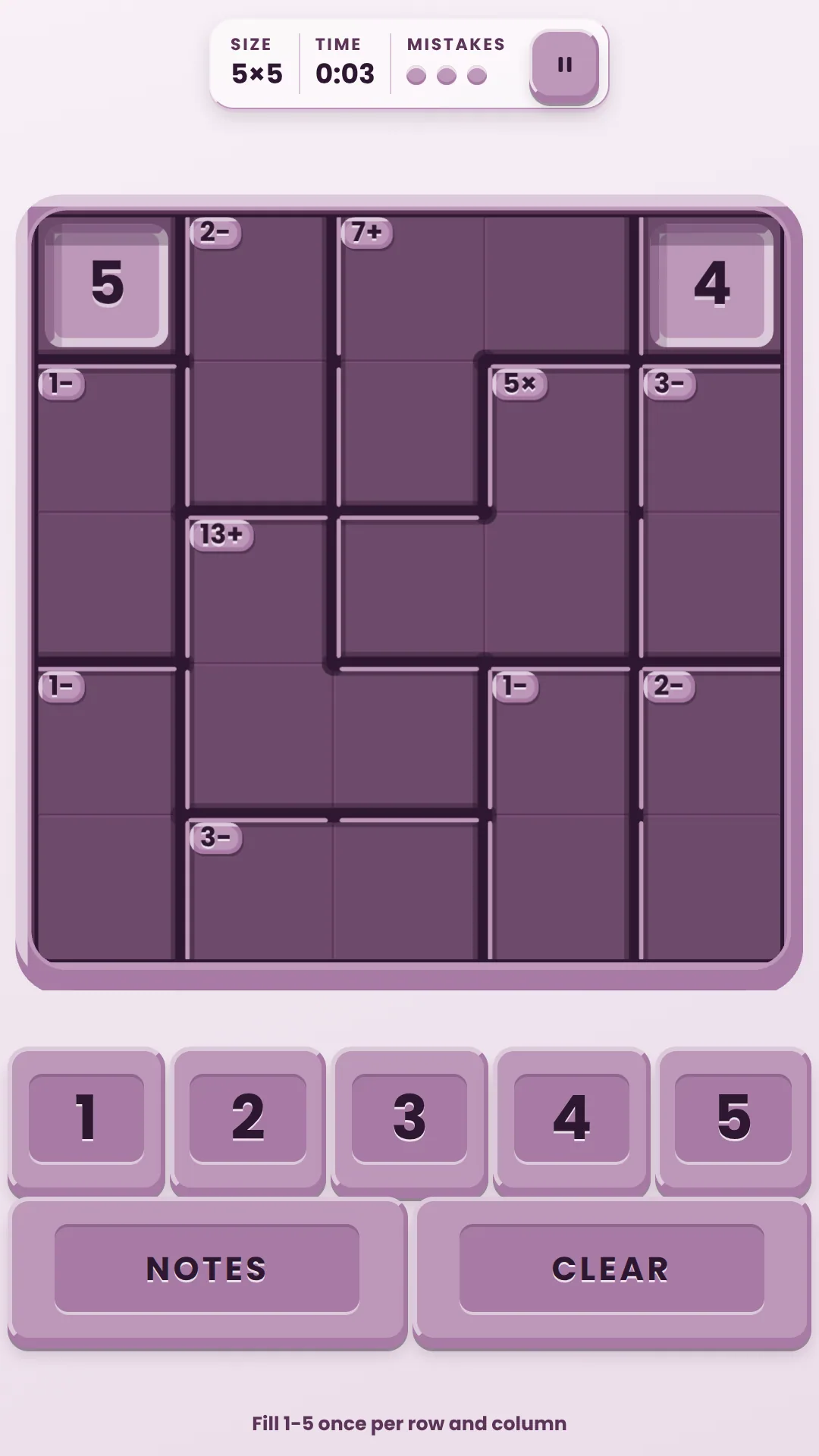 Math CagesIrregular cages, one arithmetic target each, and a grid that only has one way to fill it
-
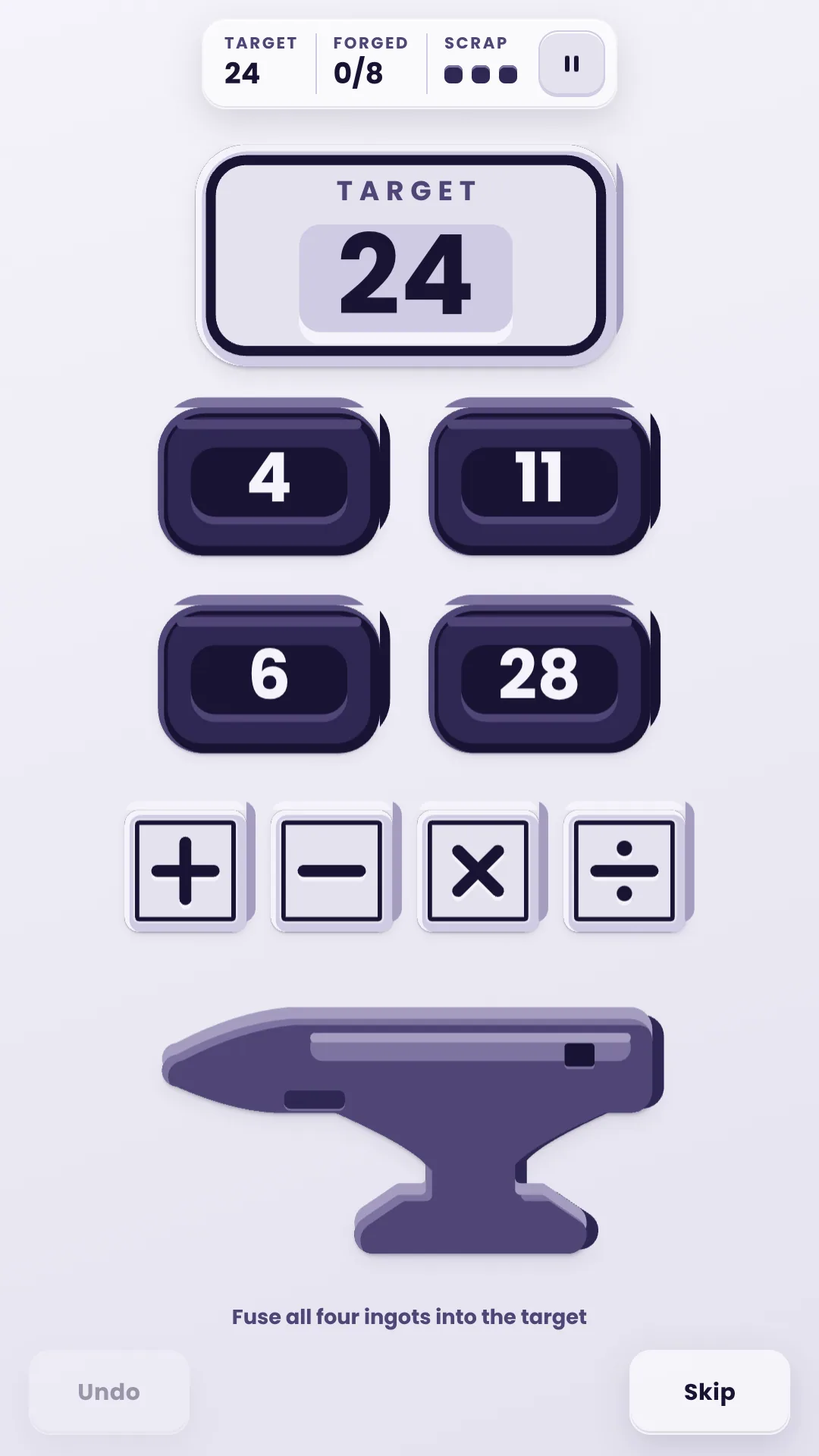 Number ForgeFour ingots, one target, and every puzzle built backwards from a solution that exists
-
 3072 MergeSlide a 4x4 grid, fuse matching tiles, and try to build the 3072
-
 Fold LabFold nets into cubes and punch folded paper, all in your head