
Volleyball
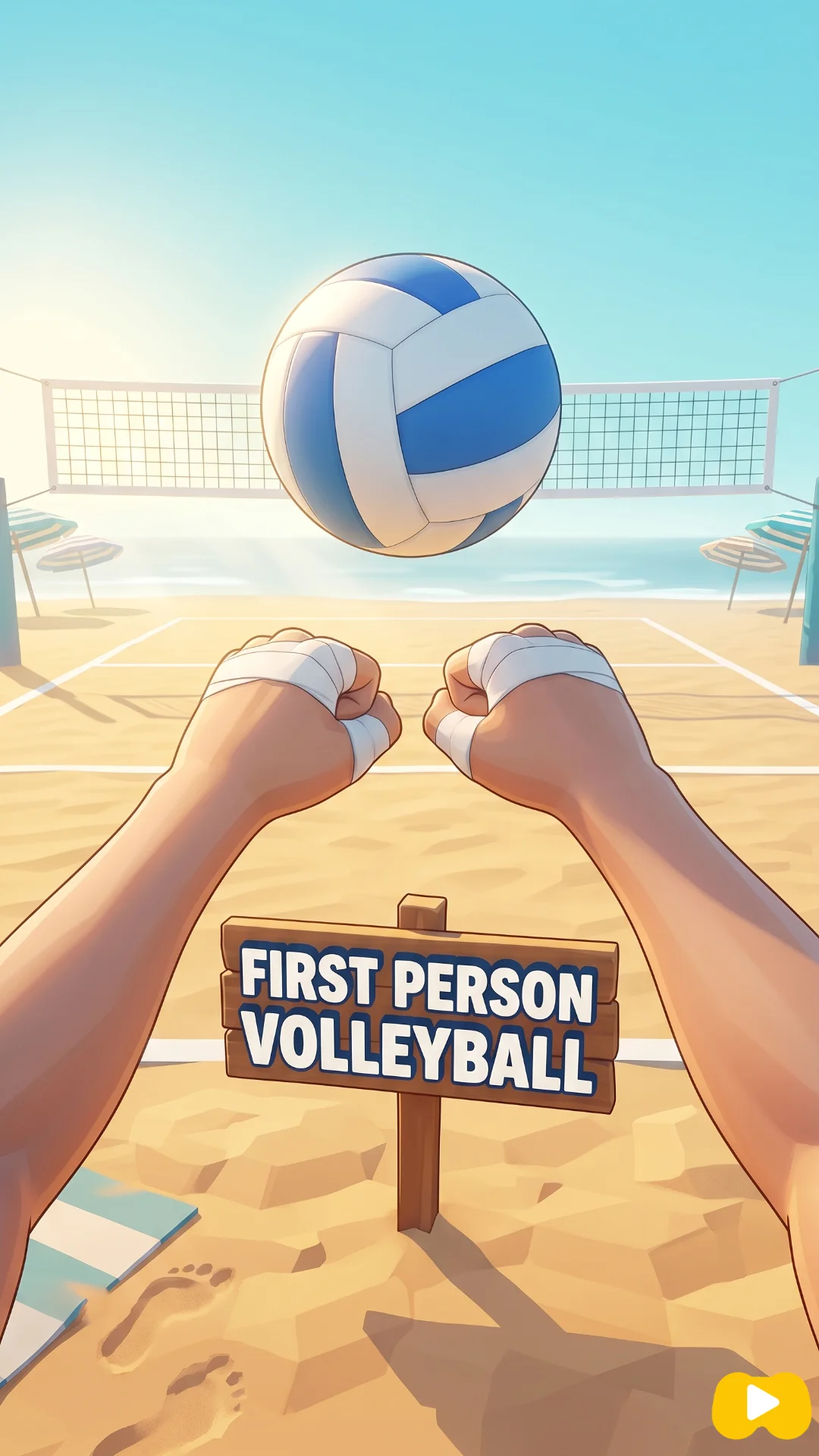
Beach volleyball from behind your own eyes, where reading depth is most of the game
About Volleyball
Most volleyball games hang the camera up in the stands. This one sits it behind your eyes, on a nine by eighteen metre sand court with the net at 2.4 metres, and leaves you to work out where the ball is actually going. That turns out to be the hard part. A ball that looks like it is dropping in front of you is usually sailing over your head, and the opening rallies are mostly you arriving somewhere the ball is not.
Rallies are single touch. One contact sends it back, so there is no digging to yourself and setting up a swing — the moment you reach it, you have committed. Points go to whoever wins the rally no matter who served, the winner serves next, and fifteen takes the match. A CPU plays the far side at easy, normal or hard, and the distance between those settings is honest rather than cosmetic: the easy opponent shanks roughly a third of the balls it gets to, the hard one misreads almost nothing.
What is different about this version
The first-person camera is the design rather than a gimmick, and the other decisions follow from it. There is no second touch, so you cannot bail yourself out of a bad read. The jump is automatic — get under a ball above 2.3 metres and your player leaves the ground unasked, which keeps the controls down to move and hit. The spike is not a button either, it is a height gate: meet the ball above roughly 2.55 metres and the return goes fast and flat with a tight landing window, meet it lower and you get a safe loop. The opponent's chance of misreading you is worked out from both things at once — whether you spiked, and how far off centre you sent it — so power and placement compound instead of trading off.
How to play Volleyball
- Serve to start the rally — click, tap or press to put the ball in play.
- Move under the ball before it arrives. You get one touch, so the position you take is the shot you get.
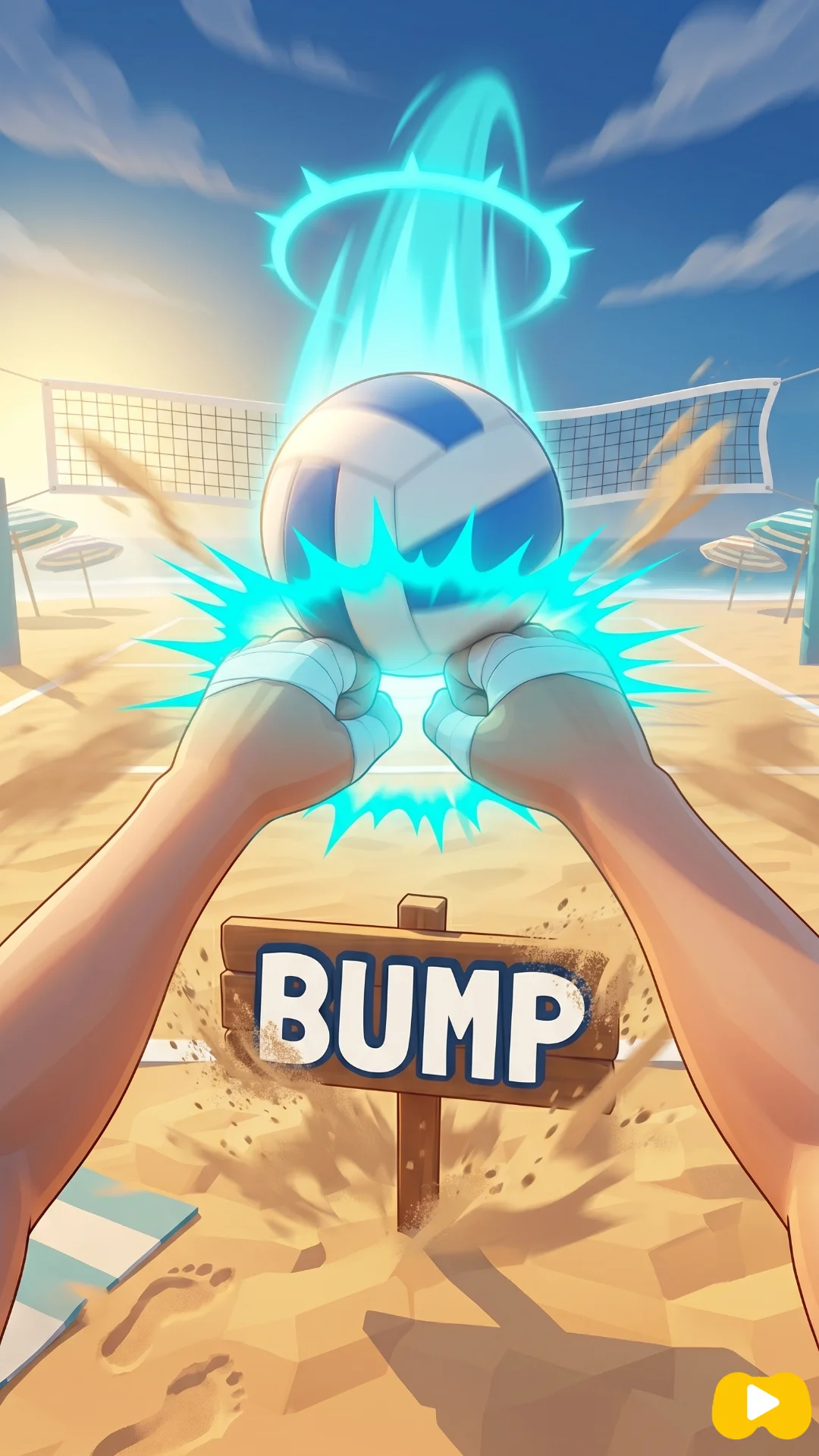
- Contact above about 2.55 metres becomes a spike; anything lower is a controlled bump.
- You cannot touch the ball twice in a row, so a bad contact ends the rally.
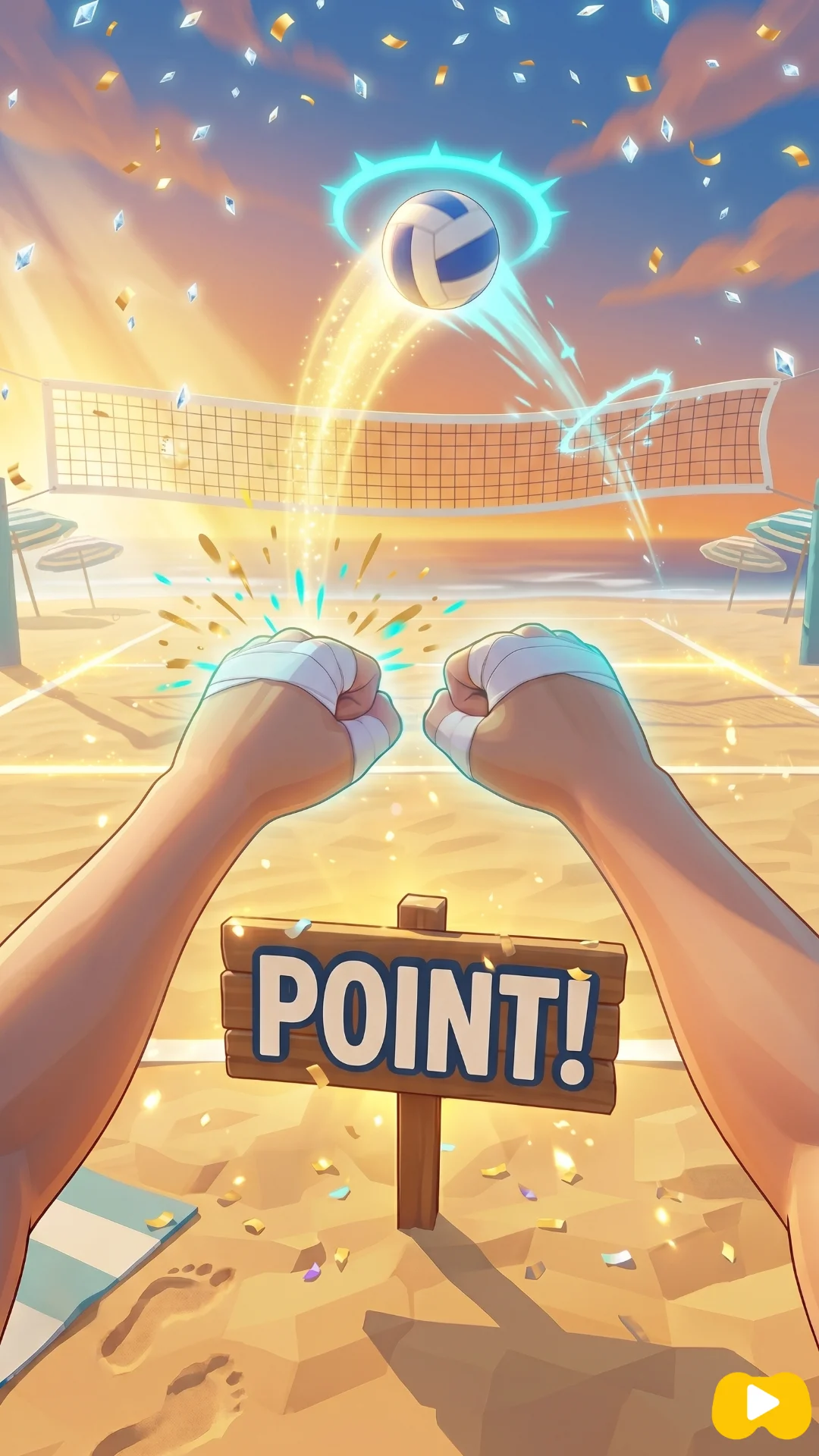
- The rally winner scores and serves next. First to fifteen takes the match.
Controls
| Desktop | Move with WASD or the arrow keys, or steer with the mouse; click to serve and to hit. |
|---|---|
| Phone or tablet | Drag anywhere to move around your half, and tap to serve or swing. |
| Players | One player. Any other characters on screen are run by the game. |
Strategy
Depth is the thing you cannot trust. The only reliable cue in first person is where the ball crosses the net relative to the white tape, not how big it looks. Instinct says move forward; the ball almost always needs you further back. Your reach is generous, a little over a metre and a half, so drifting a step deep costs you nothing and saves you from the shot that clears your head. Backpedalling under a ball already past you is the one recovery this game will not give you.
After that, everything is contact height. High contact only happens if you are standing where the ball will be while it is still falling, which means moving early rather than reacting fast. A spike near a sideline is worth far more than a hard one down the middle, because the CPU's miss chance climbs with the spike and climbs again with the sideways distance it has to cover.
The scoring rewards patience more than it looks. Every rally is a point, so a safe bump landing three metres inside the line is never wasted — on easy and normal the CPU leaks a steady stream of unforced errors and balls hit long, and you collect those just by keeping rallies alive. Save the flat swing for balls you arrived under early. Swinging hard at a stretch is how it ends up in the net, and the net drops it back on your side.
Mistakes that cost you the game
- Swinging the instant the ball comes into reach. Low contact makes a loopy return the CPU walks onto, and you have spent your only touch.
- Letting the ball come to you. High contact needs you already in position, not arriving as it lands.
- Aiming everything down the middle, which is exactly where the opponent is standing after its own shot.
Tips
- Watch the ball against the net band. Height at the crossing tells you more than apparent size.
- When unsure, take a step back. Coming forward is easy; going backwards is not.
- Serve and immediately reset to the middle of your half — the return arrives faster than the serve left.
- Give the tape more clearance than feels necessary. A shot that clips the net drops on your own side.
Questions about Volleyball
Can I set the ball to myself?
No — one touch per side, which is why position matters more than timing here.
Do I have to press a jump button?
No. The jump fires on its own when the ball is high enough.
What happens if my shot lands out?
Whoever touched it last loses the point.
Is there a two-player mode?
No, this one is against the CPU only. The three difficulty settings are the range on offer.
Does it cost anything?
No. Volleyball is free to play, runs in your browser, and needs no download, install or account.
More games like this
-
 Air HockeyA puck that sheds almost no speed, and nowhere on the table to hide
-
 FoosballThree rods a side, one shared slider, and forty seconds on the clock
-
 5 vs 10Draughts fought with gold five-coins against teal ten-coins, every capture forced
-
 Pool RummyPot the balls, add up their numbers, land on exactly 100