
Foosball
Three rods a side, one shared slider, and forty seconds on the clock
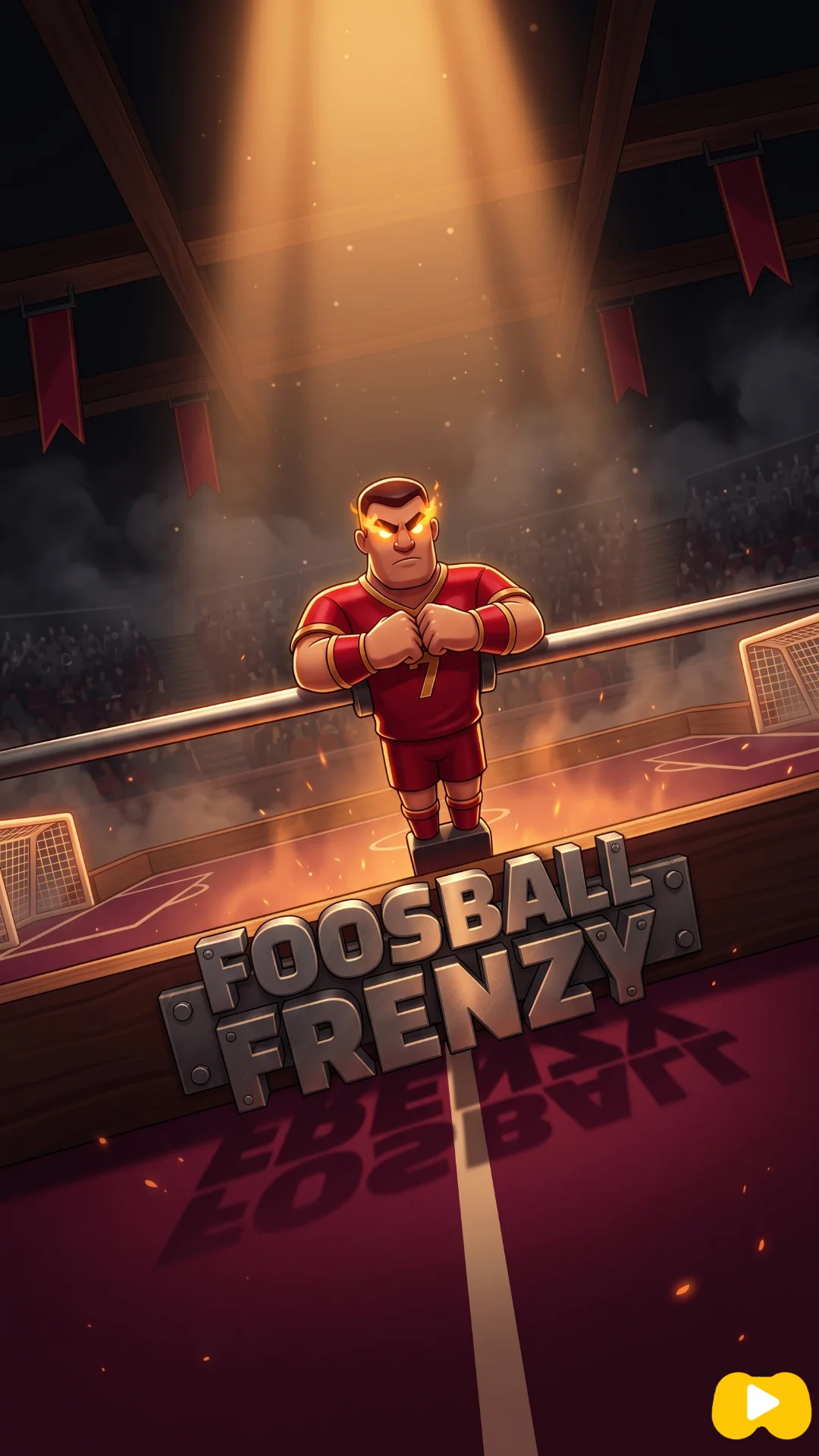
About Foosball
Foosball Frenzy 3D puts a bar table on screen and then does something most video foosball does not: it hands each player a single slider for all three of their rods. Keeper, two-bar and three-bar travel together, so every adjustment you make in defence also moves your attack. Working out where to park that line is most of the game.
A match runs forty seconds, with the clock stopped for the serve at kick-off and after each goal. That is short enough that one scrappy goal decides matters and long enough that a two-goal lead feels safe rather than certain. Draws are recorded as draws. Play someone on the same table, or face a computer side pitched at one of three levels, with your running tally of victories over it kept between visits.
What is different about this version
A real table gives you four independent rods. This gives you one control for six figures. Every rod on your side is welded to the same slider, capped at four units of travel and clamped further by each bar's own width. That constraint decides everything: covering the near post with your keeper drags your forward bar across the table too, and the gap you open is the gap the ball goes through. The kick is a swing rather than a toggle, and power is only awarded between roughly a quarter and three quarters of the way round the arc, so mistimed contact halves the ball speed. There is a stall rule as well — a ball sitting in one spot for three and a half seconds is quietly taken and re-served from the centre rather than left wedged against a wall.
How to play Foosball
- Pick a computer opponent and its difficulty, or choose 2 Players.
- Slide your line up and down the table. All three of your rods move as one.
- Strike with the kick control. The figures rotate through half a turn.
- Put the ball past the opposing keeper and over the goal line behind him.
- Play out the forty seconds. Most goals wins; level scores are a draw.
Controls
| Desktop | W and S slide your line, D kicks; player two uses the up and down arrows with left to kick. |
|---|---|
| Phone or tablet | Drag anywhere on your half to slide the line, and tap Kick. |
| Players | One or two people on the same device. Nothing here plays over the internet. |
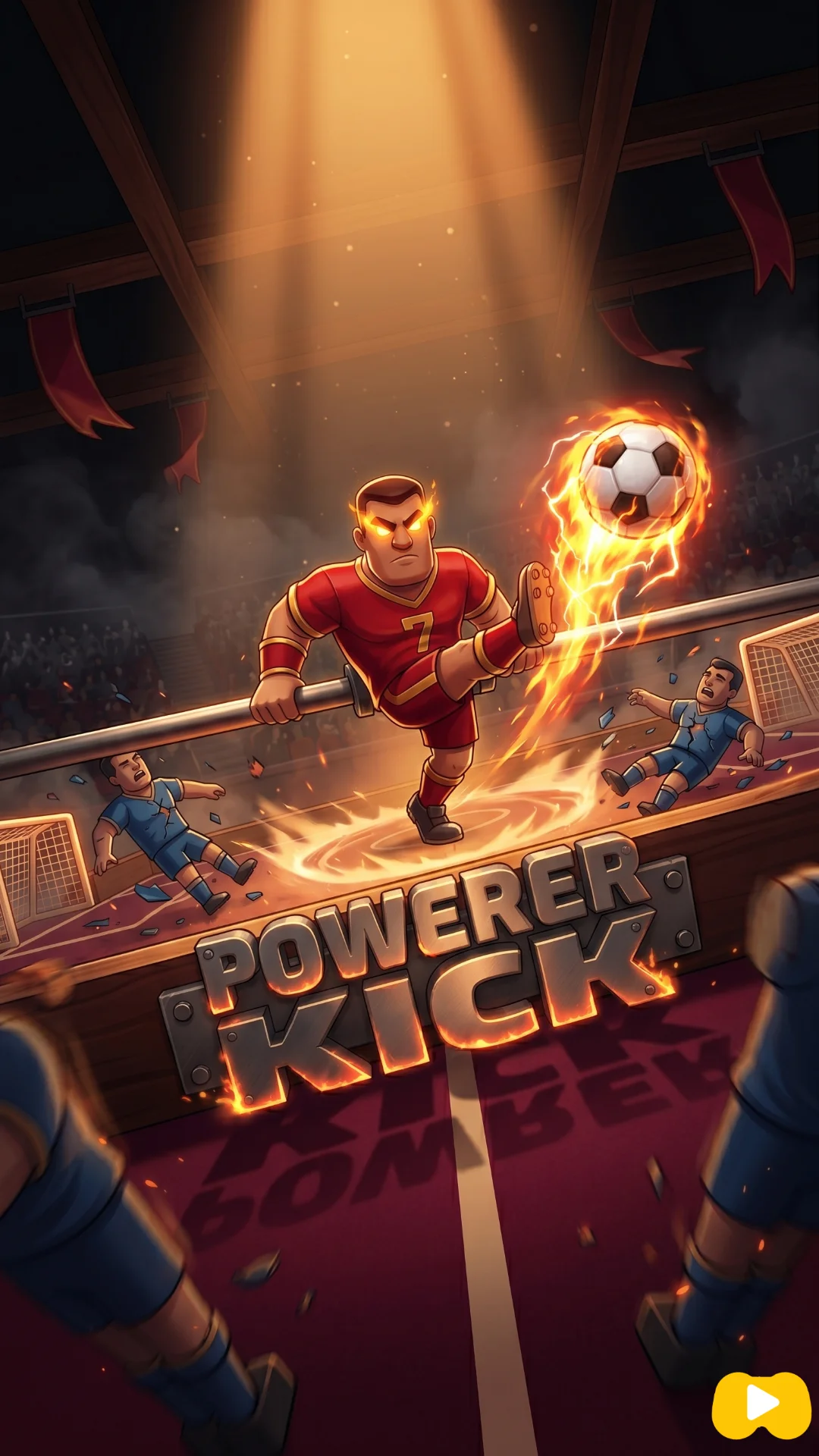

Strategy
Because one slider drives all six of your figures, think in terms of which offset covers the most threats at once rather than which rod covers the ball. The three bars sit at different distances from your goal, so any given offset puts three players on three different lines. Centred is the sensible default: it leaves the keeper on the middle of the goal mouth and the forward bar near the middle of the table, which is where loose balls collect. Chasing the ball out to the side wall with the whole line is how goals get conceded, because the keeper goes with it.
Power comes from the swing, not the button. Start the kick slightly before the ball arrives rather than at the moment it does, so contact lands in the middle of the arc. The ball barely slows as it rolls and keeps about eighty-five per cent of its speed off each wall, so a strike angled into the side stays dangerous far longer than a straight shot the keeper is already lined up on.
On hard the computer aims slightly towards your goal rather than straight up the table, but it predicts nothing — it tracks whichever of its rods the ball will reach first. Move the ball sideways before you shoot and it will still be sliding when the strike lands.
Mistakes that cost you the game
- Following the ball to the side wall with your whole line. The keeper travels with it, and the ball comes back across into an empty mouth.
- Holding the kick control down. It cycles the swing over and over, so contact lands wherever the arc happens to be.
- Playing forty seconds as though it were a first-to-five. Two up with fifteen left, park the line in front of your own goal.
Tips
- Set the computer to easy for a match and watch where its line sits when it has possession. It gives away the offsets that are hard to shoot through.
- Angle strikes into the side wall. Rebounds keep most of their speed and arrive from directions a centred keeper does not cover.
- On a phone the drag can start anywhere on your half, so keep your thumb clear of the table.
- The wins counter only moves for an outright win against the computer. A draw does not count.
Questions about Foosball
How much playing time is in one match?
Forty seconds of playing time, with the clock stopped during each serve.
Can I move each rod separately?
No. Both sides move all three rods on one slider. It is deliberate, and it is what makes positioning the interesting decision.
What happens if the ball gets stuck?
After three and a half seconds in the same spot it is re-served from the middle. Nobody is penalised.
Does two-player work on a single phone?
Yes. Choose 2 Players; each side drags its own half of the screen and has its own Kick button.
Does the computer see the ball before it moves?
No, it reacts — between seven hundredths of a second on hard and three tenths on easy. Its rods do move faster than yours.
Does it cost anything?
No. Foosball is free to play, runs in your browser, and needs no download, install or account.
More games like this
-
 Air HockeyA puck that sheds almost no speed, and nowhere on the table to hide
-
 VolleyballBeach volleyball from behind your own eyes, where reading depth is most of the game
-
 5 vs 10Draughts fought with gold five-coins against teal ten-coins, every capture forced
-
 Pool RummyPot the balls, add up their numbers, land on exactly 100