
Business Tycoon
Twelve properties, twenty rounds, and a winner decided on net worth, not bankruptcy
About Business Tycoon
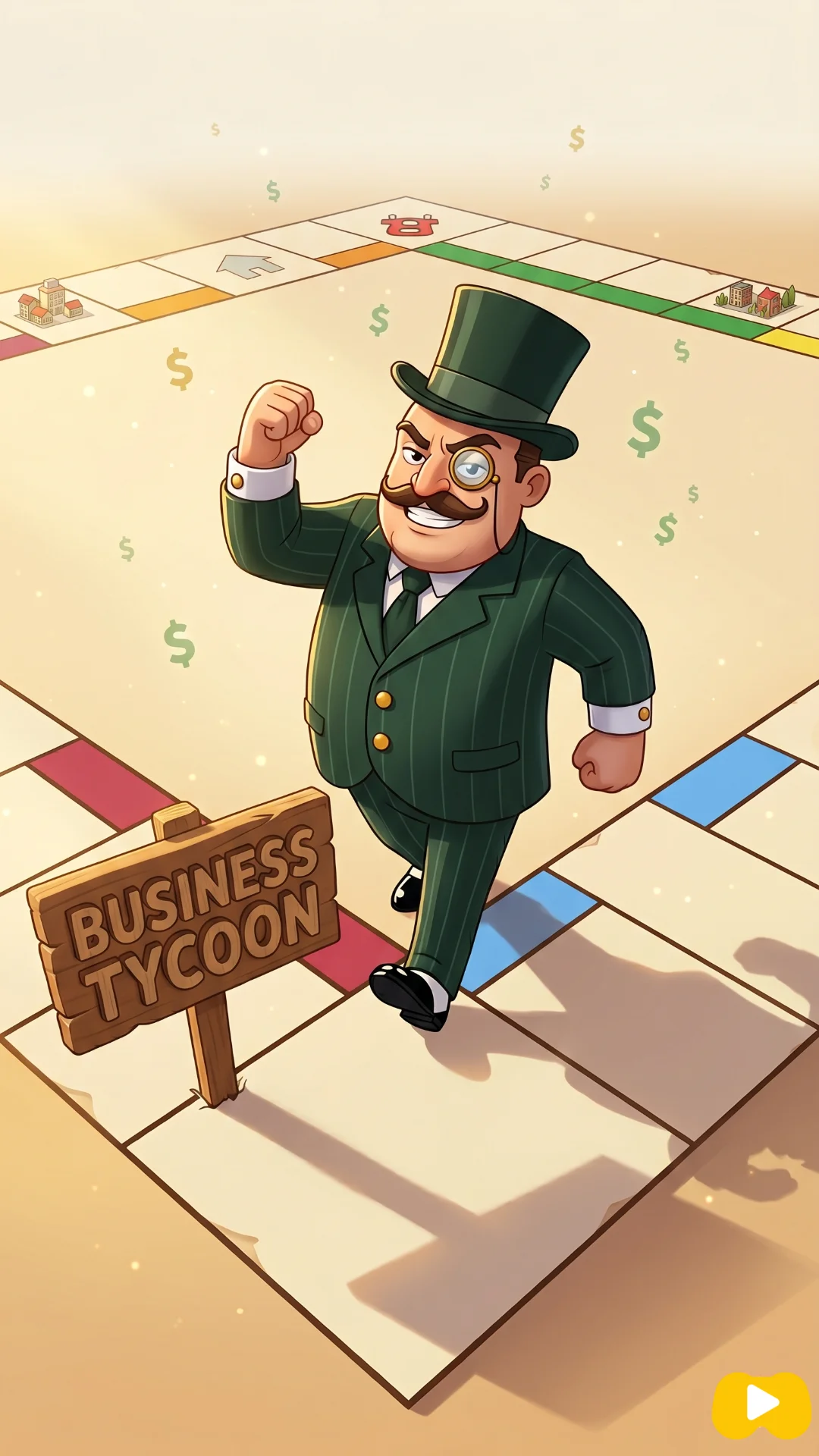
A property game trimmed down to the part people actually enjoy. The loop is twenty-four tiles rather than forty, there are twelve properties in four colour groups of three, and the match ends after twenty rounds with the richest player winning. Nobody sits out for half an hour waiting for the last two survivors to finish it off.
Everyone starts with $1,500 and collects $200 each time they pass START. Landing on an unowned property offers it at its listed price; landing on someone else's costs you rent. Between the properties sit chance tiles, fixed bonuses and taxes, all small enough that no single square ruins you outright. Rent only grows one way: own all three tiles of a colour and that group's rent doubles. There is nothing to build and nothing to negotiate.
Play up to three computer opponents at three difficulty levels, or hand the phone around a table of four. A match runs about ten minutes and ends with everyone ranked by what they are worth.
What is different about this version
There are no houses, no hotels, no jail, no auctions and no trading. Completing a colour group doubles that group's rent and that is the entire building system, which keeps the whole match inside twenty rounds. Rent is generated from the price rather than a table: twenty dollars plus a quarter of everything above $100, so the cheapest tile charges $20 and the most expensive charges $75, or $150 with the set completed. The ending differs too: instead of grinding on until one player survives, the match stops after twenty rounds and ranks everyone by cash plus the price of their portfolio. A bankrupt player also hands their properties back to the bank rather than to whoever bankrupted them, so the board reopens.
How to play Business Tycoon
- Choose two to four players, against the computer or passing one device around.
- Roll and your token moves that many tiles clockwise.
- Land on an unowned property to buy it at the listed price, or pass.
- Land on someone else's and rent is taken automatically.
- Collect $200 passing START; chance, bonus and tax tiles settle on the spot.
- After twenty rounds the highest net worth wins, counting cash plus property held.
Controls
| Desktop | Click the die to roll, then Buy or Skip on the property card; Escape opens the pause menu. |
|---|---|
| Phone or tablet | Tap the die, then Buy or Skip. Everything scales to one thumb. |
| Players | One or two people on the same device. Nothing here plays over the internet. |


Strategy
Read the scoring before you decide anything else. Net worth counts your properties at full purchase price, so the moment you buy something your score does not move: you have swapped $180 of cash for $180 of property. Buying is therefore close to free, and every property you pass up is rent you will never collect for no gain at all. The only genuine cost of buying is being short of cash when somebody's rent lands on you, and early rents top out around $30.
With twelve properties split between up to four players, completing a set is uncommon, so the more reliable play is denial. If an opponent holds two tiles of a colour, the third one is worth buying at any price you can cover, because it permanently removes their doubling. That single purchase is usually worth more than a set of your own.
The four expensive tiles pay best per landing, but $320 out of $1,500 is a fifth of your capital for one tile, and a lap of twenty-four tiles takes roughly seven rolls. Over twenty rounds you will pass START about three times for $600 total, so cash comes back slowly. The cheap group at the start of the board pays for itself in three or four visits and leaves you liquid enough to keep buying. Difficulty changes only how much cash the computer keeps back: Hard works out the largest rent on the board and holds that plus forty, then relaxes in the closing rounds.
Mistakes that cost you the game
- Skipping a property you can afford. The scoreboard values it at its price, so passing leaves you no richer and one rent stream poorer.
- Letting an opponent take the third tile of a colour you could have covered. Doubled rent lasts the rest of the match.
- Spending down to nothing on the expensive corner early, then handing it all back as rent.
- Forgetting the round counter. From round eighteen, cash held back is score you failed to convert.
- Treating chance tiles as a plan. The swings are smaller than one rent payment on a completed set.
Tips
- Buy early and often while rents are still small; the board is harmless for the first few laps.
- Watch what colours the computer is collecting and block the third tile rather than starting a set of your own.
- Keep about a hundred dollars spare once somebody completes a group.
- On Easy the computer buys on roughly a coin flip, so cheap tiles are often still free late on.
Questions about Business Tycoon
Can I trade properties with other players?
No. Properties are bought from the bank at the listed price when you land on them, which is what keeps a match near ten minutes.
What happens if I cannot pay rent?
You pay what you have and drop out. Your properties return to the bank unowned, so anyone still playing can buy them again.
How is the winner decided?
Highest net worth after twenty rounds, counting cash plus the purchase price of every property held. If everyone else goes broke first, the last player standing wins.
Does it cost anything?
No. Business Tycoon is free to play, runs in your browser, and needs no download, install or account.
More games like this
-
 Critter CrewEight cute animals, one cosy airship, and one of them is a sneak
-
 Ant ColonyEight ants underground, sixteen duties to finish, and one of them is not an ant
-
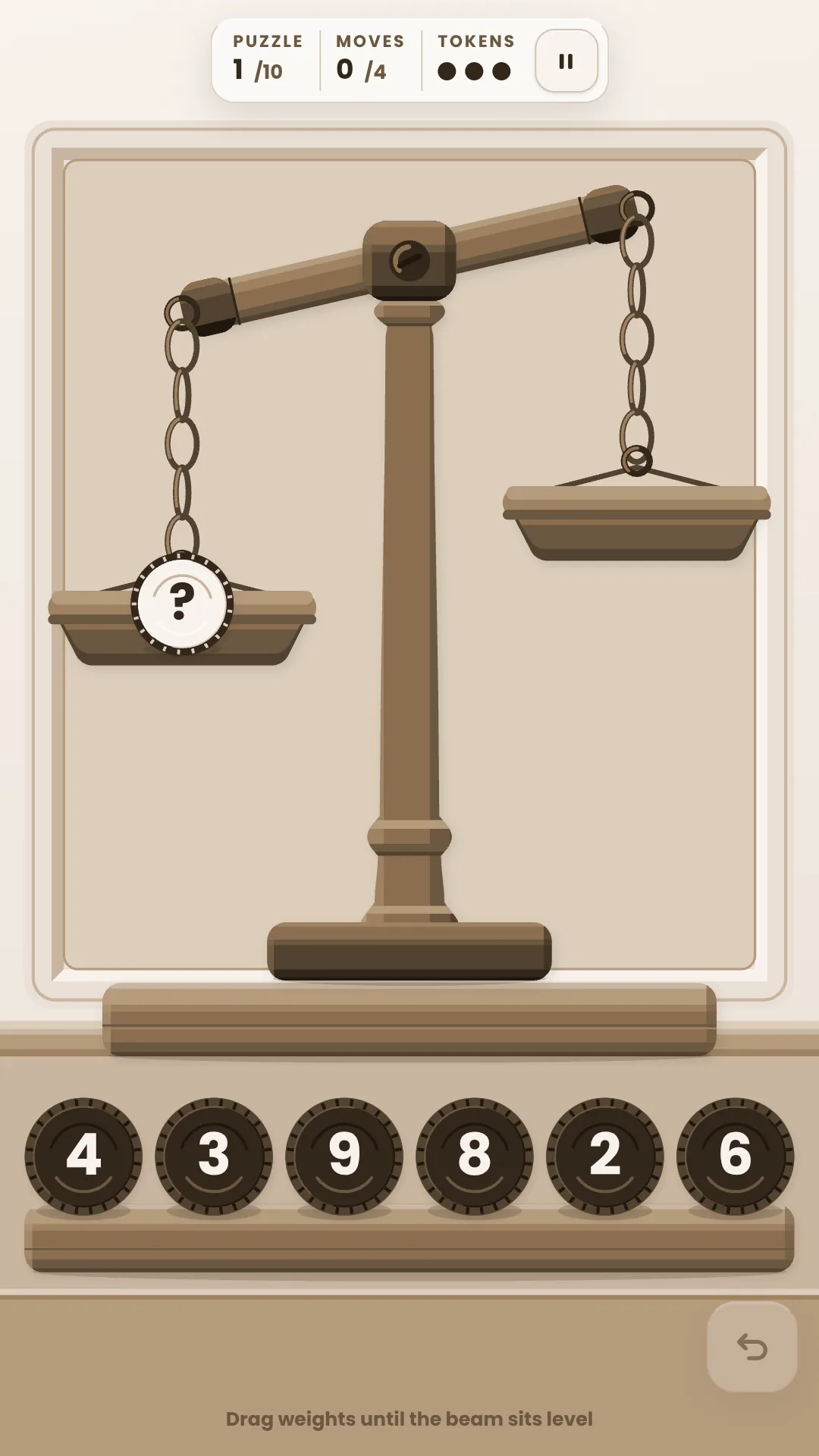 Balance ScalesA beam, a hidden shape and a tray of weights, with one arrangement that sits level
-
 Bigger Tic Tac ToeNine small boards inside one big one, and your square picks where your opponent plays