
Bigger Tic Tac Toe
Nine small boards inside one big one, and your square picks where your opponent plays
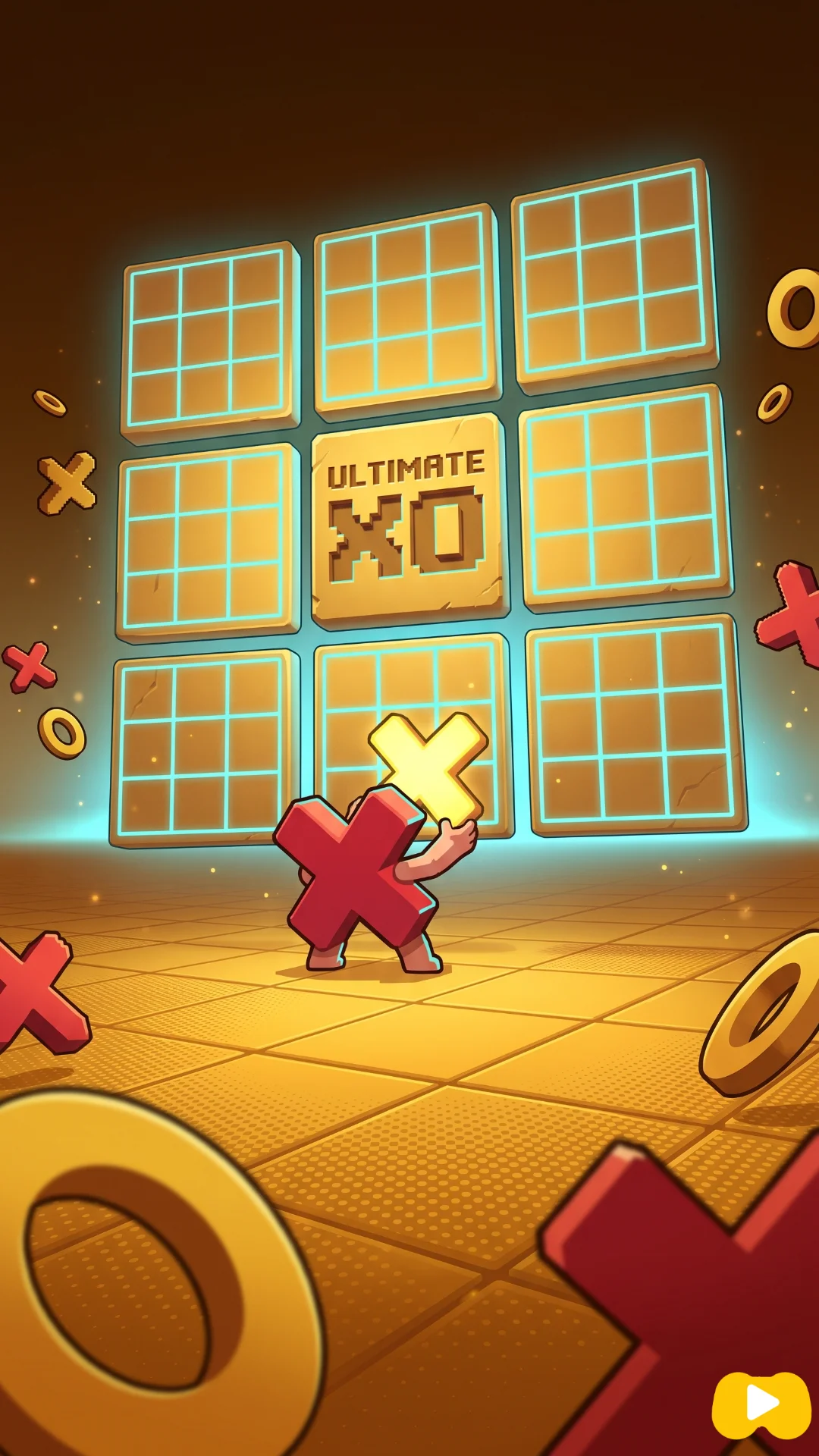
About Bigger Tic Tac Toe
Noughts and crosses collapses because both players can see every consequence four moves out. This version fixes that by nesting the game inside itself: nine small three-by-three boards laid out as one large three-by-three grid. Win a small board outright and you claim its square on the big grid. Take three of those squares in a line and the match is yours.
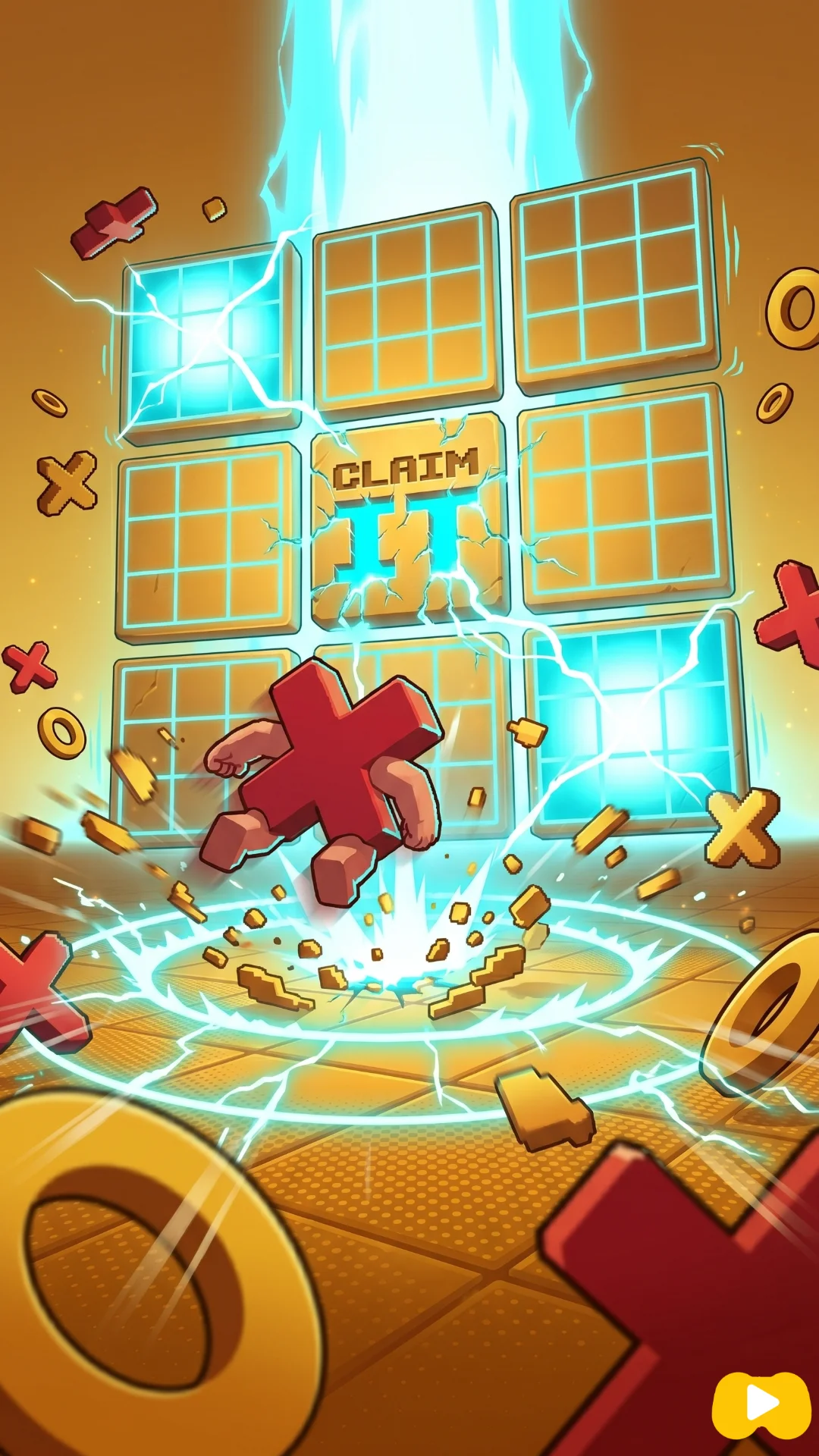
What makes it worth thinking about is the constraint. Wherever you place your mark inside a small board, the position of that cell decides which board your opponent must play in next. Take the top-right cell and they are sent to the top-right board. The only release is when the board they are sent to is already finished, won or filled, in which case they may play anywhere.
Every move is two decisions folded together: what it does for you locally, and what it hands them globally. Winning a small board while granting a free choice of the grid is usually a bad trade. Play the computer at three strengths, or pass the device between two people.
What is different about this version
The two harder opponents are not rule lists. Normal and Hard both run Monte Carlo tree search, playing the position out to the finish thousands of times and keeping whichever move wins most often. Normal gets 1,800 playouts or about a third of a second; Hard gets 24,000 or a full second, which is why it takes visibly longer to answer and why it rarely hands you a free board by accident. Easy is something else entirely, a one-move scorer with random noise that checks only whether its move immediately lets you finish a small board. Dead boards are handled properly too: a board that fills with no line counts as decided, so sending someone there gives them the run of the grid.
How to play Bigger Tic Tac Toe
- Pick the computer at Easy, Normal or Hard, or two players on one device.
- Coral moves first and may open anywhere.
- The cell you take inside a small board sends your opponent to the matching board above.
- Three in a row wins a small board and claims its square; a full board with no line belongs to nobody.
- Being sent to a finished board means a free choice of any open board.
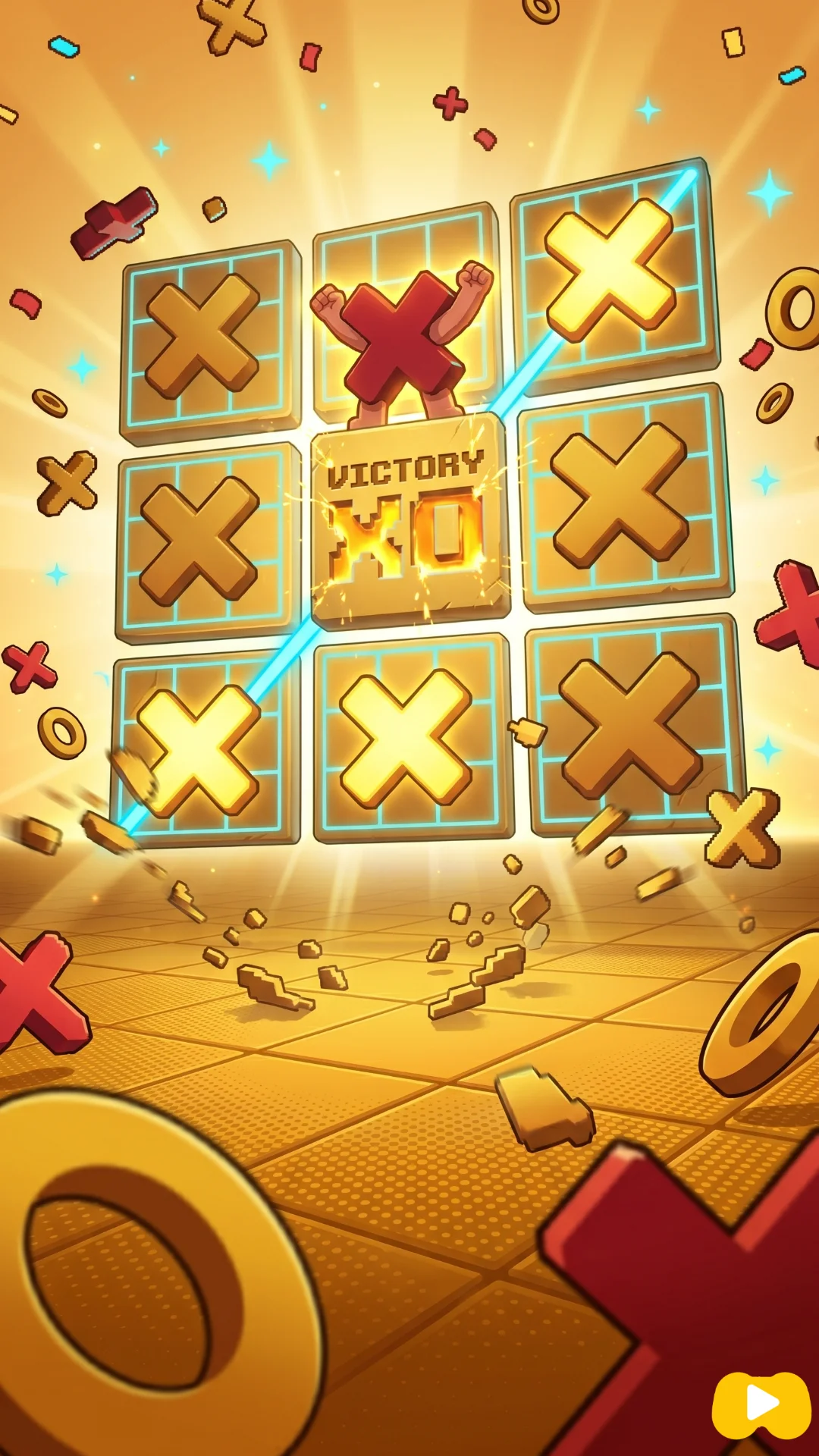
- Claim three boards in a line to take the match.
Controls
| Desktop | Click a legal cell, or move a cursor with the arrow keys and place with Enter; Escape pauses. |
|---|---|
| Phone or tablet | Tap the cell. Legal cells are tinted in the colour of whoever is to move. |
| Players | One or two people on the same device. Nothing here plays over the internet. |
Strategy
Count the free moves. Sending your opponent to a board that is already decided lets them play anywhere, and against the Hard search that one concession usually outweighs whatever you gained locally. Before placing a mark, check which cell index you are taking and what state the matching board is in. The centre cell is the strongest square twice over: it sits on four of the eight local lines, and it forwards your opponent into the centre board, the most contested square on the big grid.
The corollary is that losing small boards on purpose is fine. Only three boards in a line matter. If your opponent is one move from taking the bottom-left board and that board sits on none of your candidate lines, let them have it. What you cannot allow is two of their boards sharing a line with a third they can still reach.
Drawing a board is the underrated weapon, since a dead board removes a square from the big grid for good and can kill a line six moves in the making. When you are behind, find the board where two of their lines cross and fight for a draw there. Against Easy, build two threats in one small board while feeding it into boards where it has nothing; it looks a single move ahead and will cheerfully send you back to the board you are already winning.
Mistakes that cost you the game
- Taking an obvious local win without checking where that cell sends them. An edge board bought with a free move is a net loss.
- Ignoring boards that are nearly full. One with two cells left is about to become somebody's free move.
- Chasing every board. Three in a line wins; five scattered wins nothing.
- Assuming Hard blundered because it paused. The pause is the search spending its budget.
Tips
- Open in the centre cell of the centre board.
- When a board offers you nothing, pick the worst destination for your opponent instead.
- Keep two candidate lines alive so losing one board does not lose the match.
- Fill a board to a draw when it sits on their last line.
- Start on Normal. Easy telegraphs itself; Hard punishes an unplanned opening.
Questions about Bigger Tic Tac Toe
Can I be sent to a board that is already won?
No. If the matching board is finished, you choose any open board. That free move is worth engineering for yourself and denying to them.
What if a small board fills with nobody winning it?
It is dead. Neither side owns that square and one line of three disappears from the big grid permanently.
Does the computer see anything I cannot?
No. Hard simply simulates more games before choosing, and two threats it cannot answer at once will still beat it.
Can two people play on one phone?
Yes, in the pause menu. Pass the handset across; coral moves first and your head-to-head score is kept.
Does it cost anything?
No. Bigger Tic Tac Toe is free to play, runs in your browser, and needs no download, install or account.
More games like this
-
 ChessEvery rule of chess, and an opponent that never looks at your reply
-
 Four in LineSeven columns, six rows, and a search that would rather block you than build
-
 Tic Tac PushA 5x5 board, two walkers, loose blocks — shove three of your mark into a line
-
 Ant ColonyEight ants underground, sixteen duties to finish, and one of them is not an ant