
Perfect Circle
One stroke, one dot, and a percentage you will not like as much as you expected
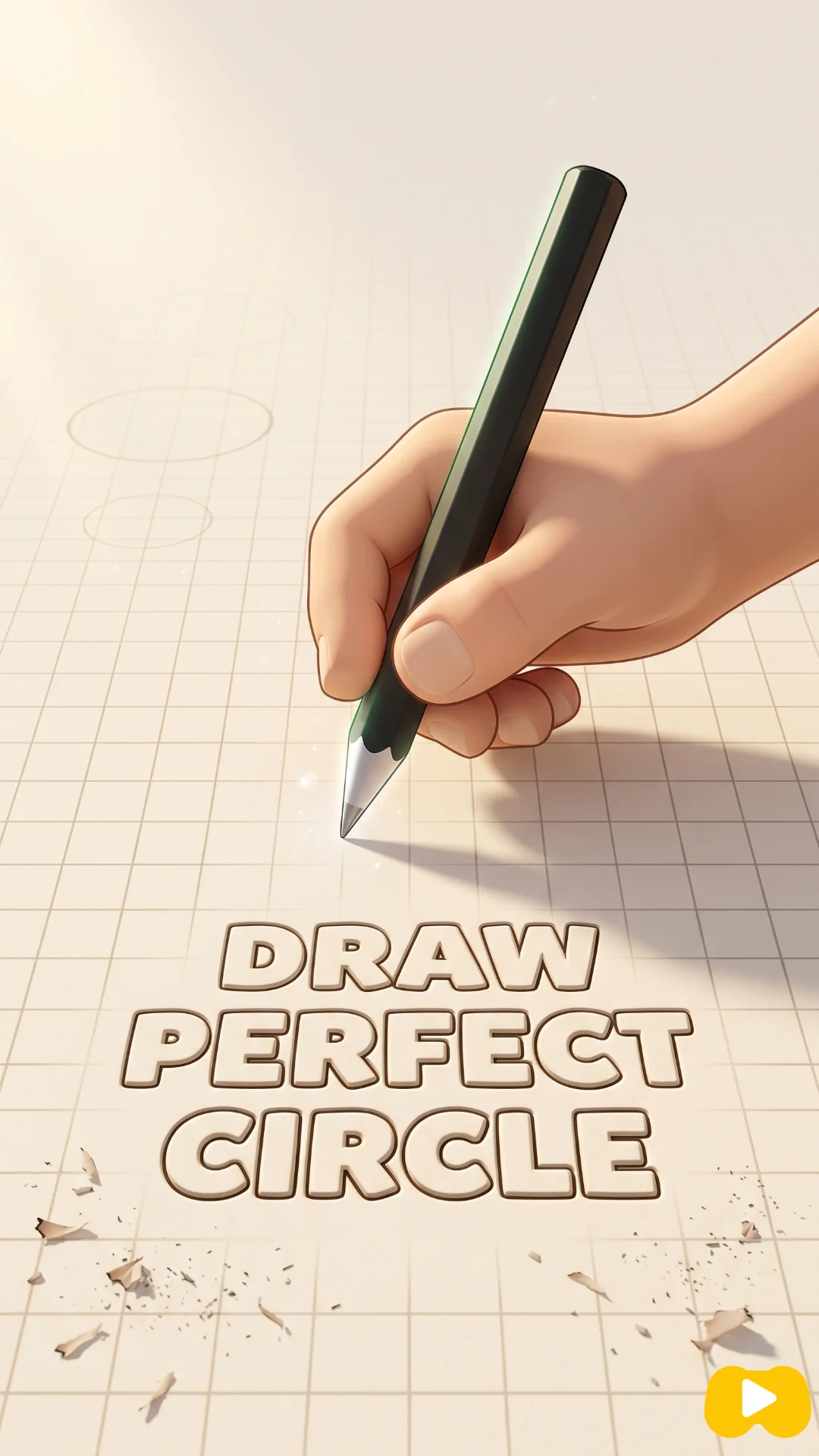
About Perfect Circle
Put a finger or a cursor down, loop it once around the dot in the middle, and lift. The stroke is measured and you get a number out of a hundred. That is the entire game, and the reason it works is that everybody is confident before their first attempt and nobody is confident after it. It takes about four seconds to play and rather longer to put down.
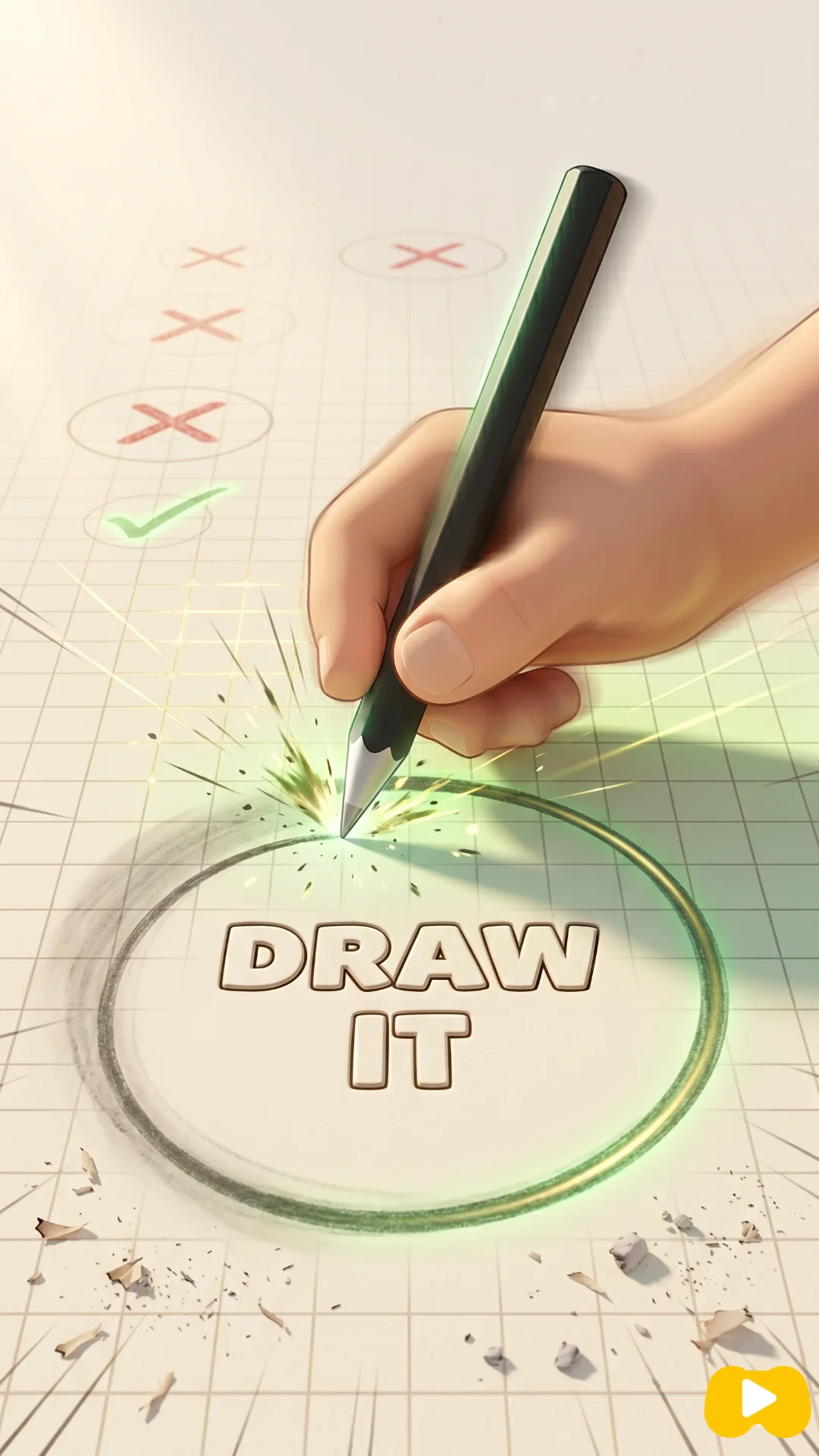
The score is not a vague impression of roundness. Your stroke is resampled at even spacing, the centre and average radius are worked out from the points, and the number comes mostly from how much your radius wandered — with smaller contributions from whether you closed the loop and how much of the full turn you covered. Draw an oval and it says so. Leave the dot outside your loop and it does not score at all. Attempts are counted, your best is kept, and after each try the circle the game fitted to your stroke is drawn over what you actually drew, which is usually more informative than the percentage.
What is different about this version
The weighting is published in the behaviour rather than hidden: radius consistency is worth about three fifths of your score, closing the loop about a quarter, and covering the full turn the rest. Several checks run before any of that, and they fail hard — a shape more than two and a half times longer than it is wide is capped in the teens, a stroke that never reaches all four quadrants is capped at twenty-five, and a loop that does not enclose the dot scores zero whatever it looks like. Drawing past your starting point is explicitly allowed: only the first complete turn is measured, and the rest is trimmed off rather than counted twice.
How to play Perfect Circle
- Press down anywhere and draw a single loop around the centre dot.
- Keep the dot inside the loop — a circle drawn off to one side is rejected outright.
- Come back round to where you started and lift.
- Your score, a star rating and the fitted circle appear over your stroke.
Controls
| Desktop | Click and drag in one stroke, then release. |
|---|---|
| Phone or tablet | Draw with one finger and lift when you close the loop. |
| Players | One player. Any other characters on screen are run by the game. |
Strategy
Because the score is dominated by how much your radius varies, and because that variance is judged against your own average radius rather than a fixed number, a large circle is worth drawing. Your hand wobbles by roughly the same number of pixels whatever size you draw, so the same wobble is a much smaller fraction of a wide loop. Use as much of the screen as you can without your wrist or your finger running out of travel.
That travel limit is the real constraint, and it is why moving from the elbow rather than the wrist is not just folklore. A wrist rotation traces an arc that flattens on the far side, and the aspect-ratio check punishes that harder than almost anything else. On a phone, swinging the whole forearm with a relaxed finger beats a tight pivot every time.
Two cheap points are worth collecting deliberately. Closure is a quarter of the score and overlapping your start counts as fully closed — since anything past the first lap is trimmed before measurement, carrying on a little past where you began is free marks with no downside. Coverage works the same way: stopping slightly short to keep the stroke tidy costs more than the tidiness is worth. Speed itself is not measured, because points are resampled by distance rather than by time, but drawing slowly tends to introduce more small corrections, and corrections are exactly what the variance term picks up.
Mistakes that cost you the game
- Drawing a small, careful circle. Careful does not help when the measurement is relative to your own radius.
- Stopping exactly where you started, or just short of it. Overlapping costs nothing and secures the closure term.
- Pivoting from the wrist, which produces a shape the aspect check reads as an oval.
Tips
- Start at the top or the bottom rather than the side — it is easier to judge where you began.
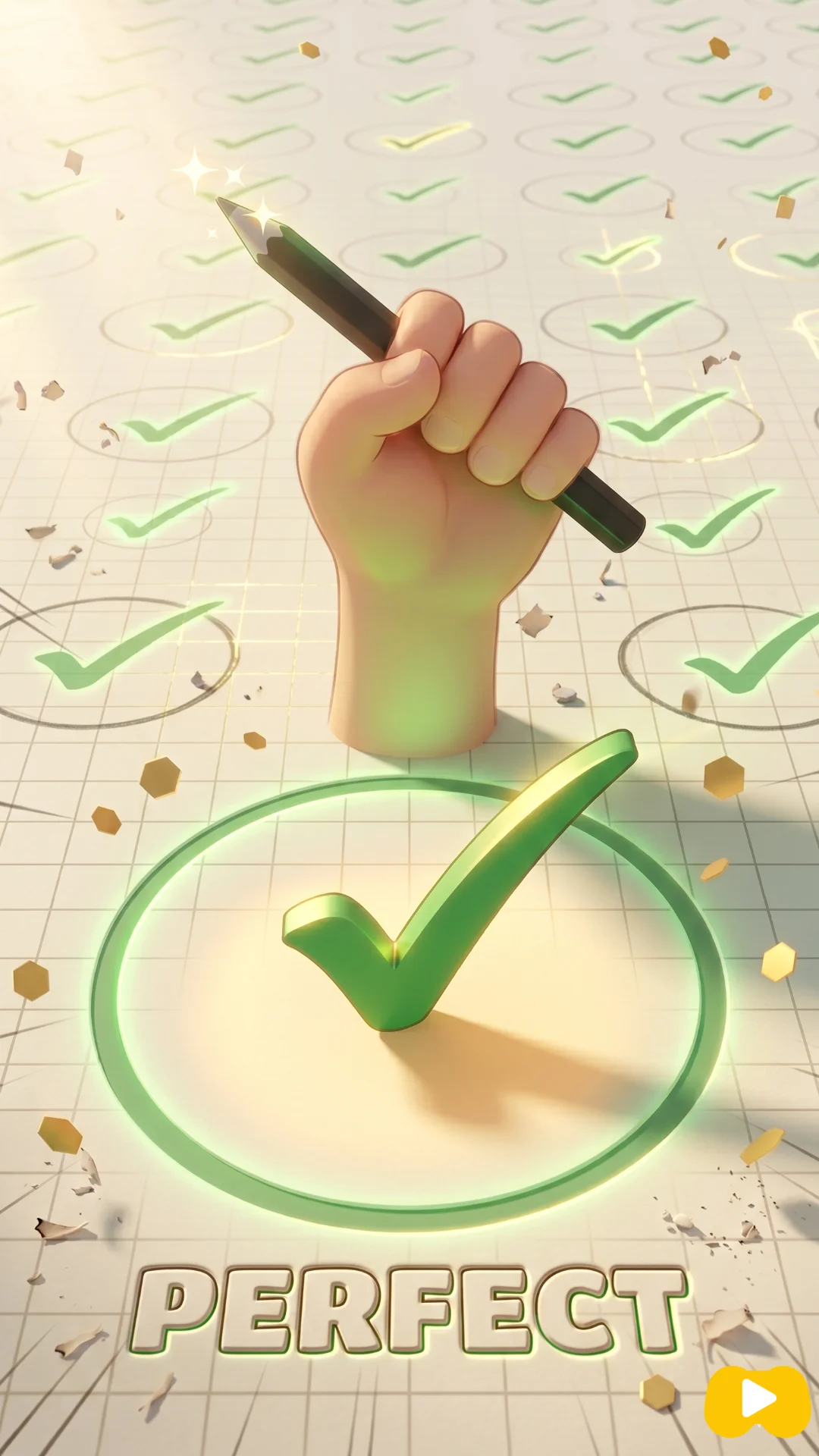
- Compare your stroke with the fitted circle drawn over it. The gap shows you which part of the sweep drifted.
- A faint guide ring appears while the canvas is idle if you want a reference before you start.
- Ninety-five and above earns three stars, eighty-five two, sixty one.
- Your best is stored on the device and can be reset from the pause menu.
Questions about Perfect Circle
What exactly is being measured?
Mostly from how much the distance from your stroke to its own centre varied, with smaller weightings for closing the loop and covering a full turn.
Why did I score zero?
Almost always because the centre dot ended up outside your loop. That is checked first and fails the attempt outright.
Does drawing faster or slower change the score?
Not directly — the stroke is resampled at even spacing, so speed matters only through how steady it keeps your hand.
Can I draw more than one lap?
You can, and only the first full turn is scored. The extra is trimmed rather than penalised.
Is ninety-five realistic?
Reachable with a big, relaxed, elbow-led stroke, but not in your first few tries. Most people sit in the seventies for a while.
Does it cost anything?
No. Perfect Circle is free to play, runs in your browser, and needs no download, install or account.
More games like this
-
 SpinoutOne orbit, one button, and a combo that never resets until something hurts you
-
 3072 MergeSlide a 4x4 grid, fuse matching tiles, and try to build the 3072
-
 Ball EaterSwallow anything eight per cent smaller, and stay well clear of the spiky red one
-
 Balling BallSlide the floors under a bouncing ball and drop it through the gaps