
Peacock Glide
The gap keeps narrowing while the pipe is still on its way towards you
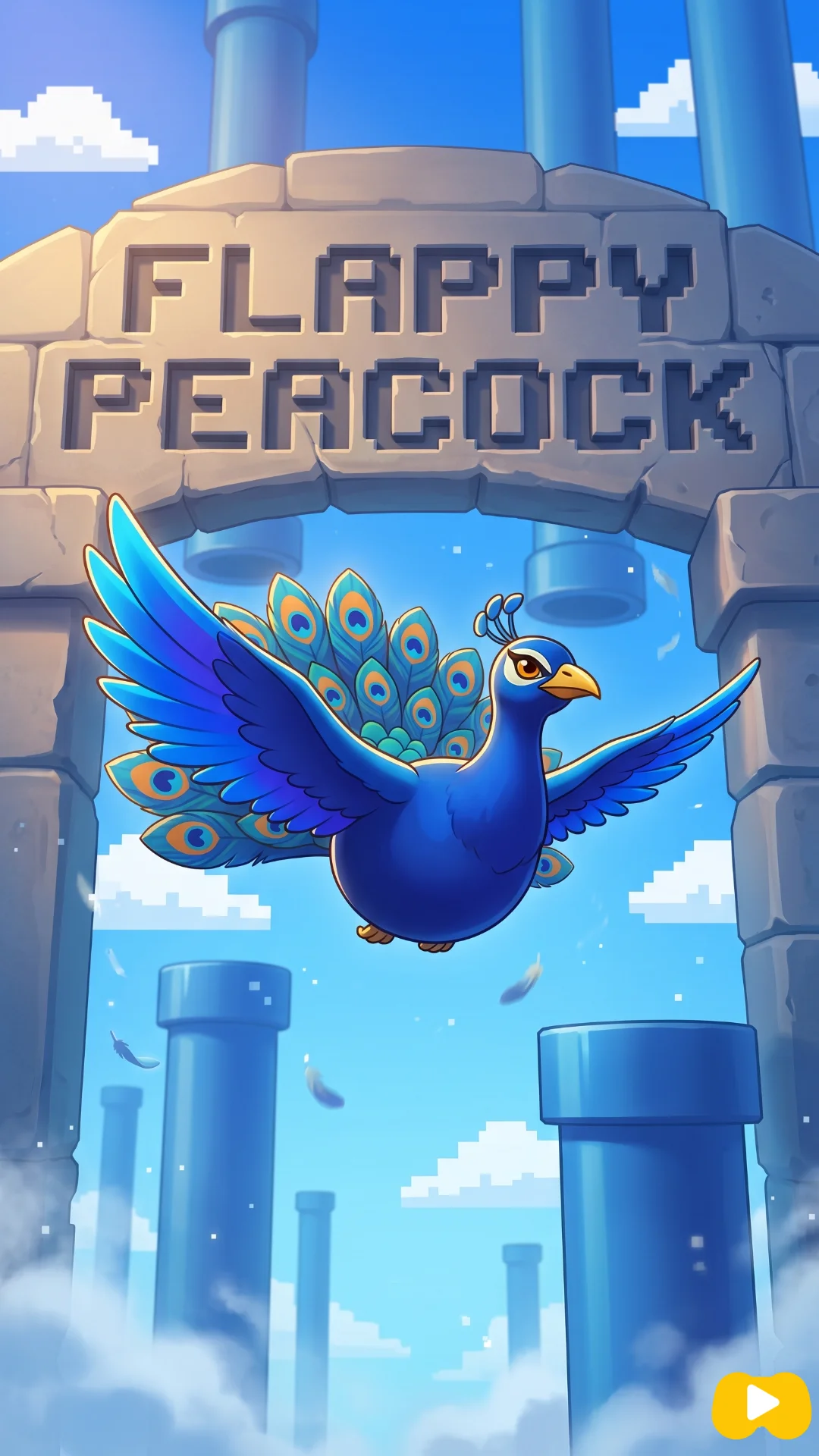
About Peacock Glide
Peacock Glide is the one-button endurance test with a peacock in it, and one change that makes it meaner than it looks. The gap between each pair of pipes is not fixed. Every pipe that spawns is a little narrower than the last, and on top of that each pipe keeps closing while it travels across the screen, so the hole you judged at the right-hand edge is smaller by the time you fly through it.
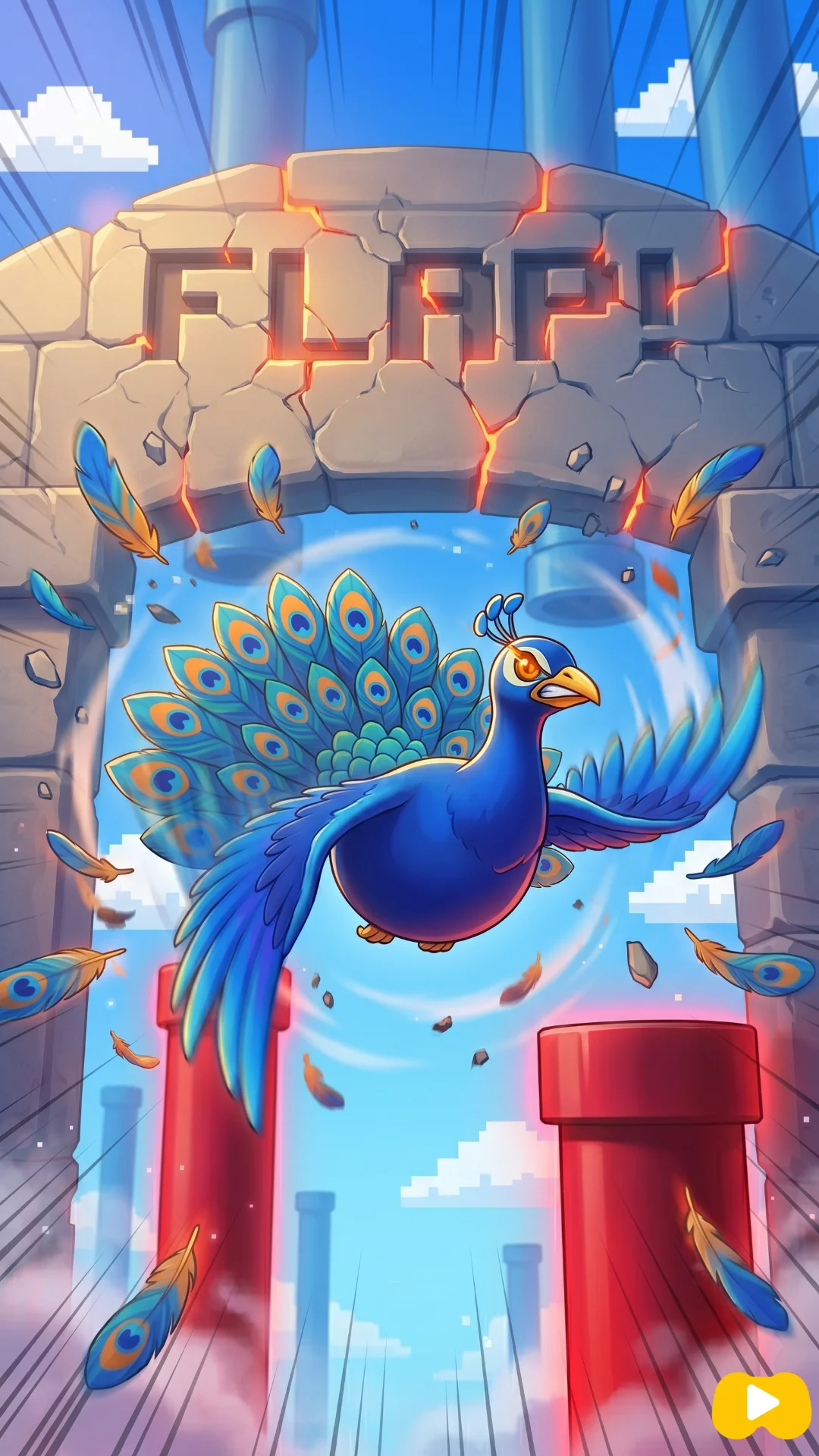
The pipes tell you how bad it is getting. Blue means a comfortable gap, orange means it has tightened past the point where you can improvise, and red means you are near the floor of sixty-five pixels, which is a little over twice the height of the bird. The controls never change: one tap, and gravity does the rest. Clouds drift, the ground scrolls, the score sits at the top, and there is nothing else to manage — no lives, no power-ups and no difficulty setting, because the difficulty is the pipes themselves and they handle it on their own.
What is different about this version
Two mechanics separate this from the version everyone has played. First, the gap shrinks twice over: each new pair spawns narrower than the last, and every pipe already on screen continues to close as it approaches, faster the higher your score. A pipe that spawns with a comfortable gap will have lost a noticeable slice of it before you arrive. Second, the ceiling is lethal. There is no invisible roof to bounce along while you think — climbing out of the top of the sky ends the run exactly as a pipe would. Between them, those two rules kill the usual strategy of flying high and dropping into each gap late.
How to play Peacock Glide
- Tap, click or press Space to start, and again for every flap.
- Each flap sets a fixed upward push; falling accelerates until it caps out, so flaps have to be rationed.
- Pass between the pipes to score. Touching a pipe, the ground or the ceiling ends the run.
- Watch the colour of the next pair — blue, orange and red are a live readout of how much room is left.
Controls
| Desktop | Space, Enter or a click to flap; P or Esc to pause. |
|---|---|
| Phone or tablet | Tap anywhere on the screen to flap. |
| Players | One player. Any other characters on screen are run by the game. |
Strategy
Fly the centre line, not the lower lip. Because a pipe closes symmetrically, both edges creep towards the middle as it travels, so any margin you leave against the bottom is being eaten from below while you fly. The middle of the gap is the only part that does not move, and it is where the colour change happens to be easiest to judge as well.
The rhythm is the real skill. A flap is a fixed impulse and gravity builds until your fall speed caps, which means a single flap buys a predictable arc and two in quick succession buy far more height than you wanted. Settle into one steady tap per short descent early, before the game is difficult, so the pattern is already in your hands when the gaps tighten around a score of fifteen or twenty.
Read one pipe ahead. A pair arrives roughly every second and a half, and the height you need for the next gap is decided while you are still passing through the current one. If the pipe after next is orange or red, start moving towards its centre line immediately rather than correcting at the last moment — late corrections need big flaps, and big flaps are what put you into the top pipe or through the ceiling. Gaps are placed at random heights within a wide band, so a long run of similar heights is luck rather than a pattern to lean on.
Mistakes that cost you the game
- Aiming for the bottom of the gap. The lower edge rises as the pipe approaches, so the room you thought you had is gone by the time you get there.
- Panic-flapping when a gap looks tight. Two quick flaps overshoot badly, and the ceiling kills as readily as a pipe.
- Watching the pipe you are inside instead of the one behind it. By then that gap is already decided.
Tips
- Treat the colour as an instrument. Orange means commit to a height early; red is near the smallest gap the game gives.
- Keep your average height near the middle so there is room to correct in both directions.
- Short taps in a steady rhythm beat bursts — the fall speed is capped, so a controlled descent is recoverable.
- The bird bobs gently before you start. Use that pause to pick your rhythm.
- The score is simply pipes cleared and the best is kept on your device, so restarting immediately costs nothing.
Questions about Peacock Glide
Do the gaps stop shrinking eventually?
Yes, at a hard floor. Past that point the gap stays constant and the game becomes purely a test of rhythm.
Does hitting the top of the screen end the run?
It does. There is no safe ceiling in this version — the top boundary is as fatal as a pipe.
Is my best score saved?
It is stored in your browser on that device, and shown on the end screen whenever you beat it.
Is there a pause?
Yes, P or Esc on a keyboard, and a pause control on screen. It stops the field completely rather than slowing it.
Does it cost anything?
No. Peacock Glide is free to play, runs in your browser, and needs no download, install or account.
More games like this
-
 Ball EaterSwallow anything eight per cent smaller, and stay well clear of the spiky red one
-
 Balling BallSlide the floors under a bouncing ball and drop it through the gaps
-
 Claw CraneA candy-pink claw machine full of plush critters, and ten tokens to win them all
-
 DodgeballOne against the pack, three lives, and a catch that knocks the thrower straight out