
Ball Breaker
Eight columns, one more row of bricks every level, and a paddle that aims by contact
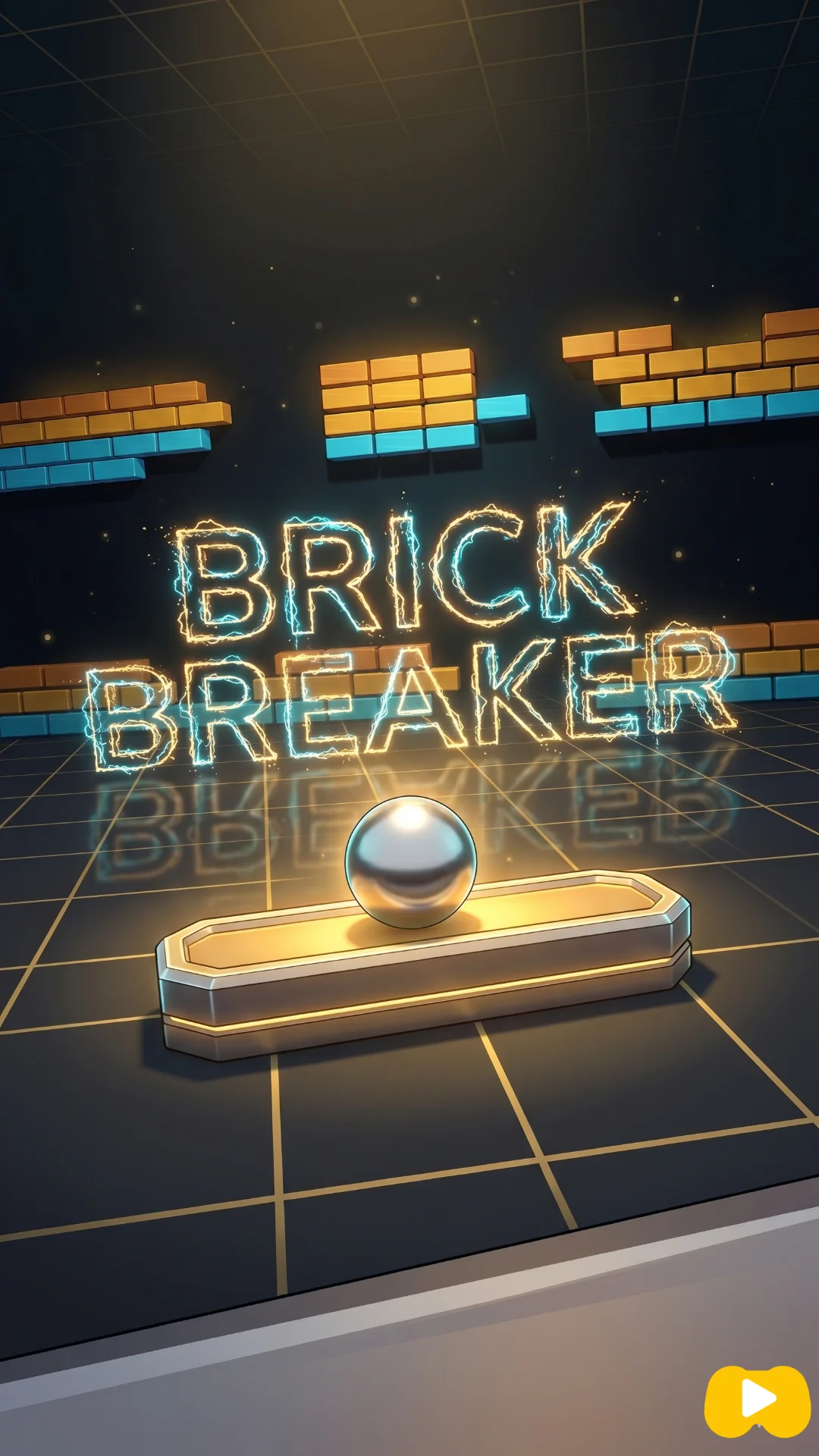
About Ball Breaker
Ball Breaker is a brick game with the arithmetic kept visible. Level one is five rows of eight. Every level after adds a row until it tops out at ten, and the top two rows of any board take two hits instead of one. Three lives, no continues.
The ball's speed is fixed for the whole of a level and then steps up for the next, which is the choice that shapes everything else. A level has one tempo from serve to clear, so you settle into it instead of bracing for a ramp. Points are ten multiplied by the level number, so the same brick is worth ten times more on level ten.
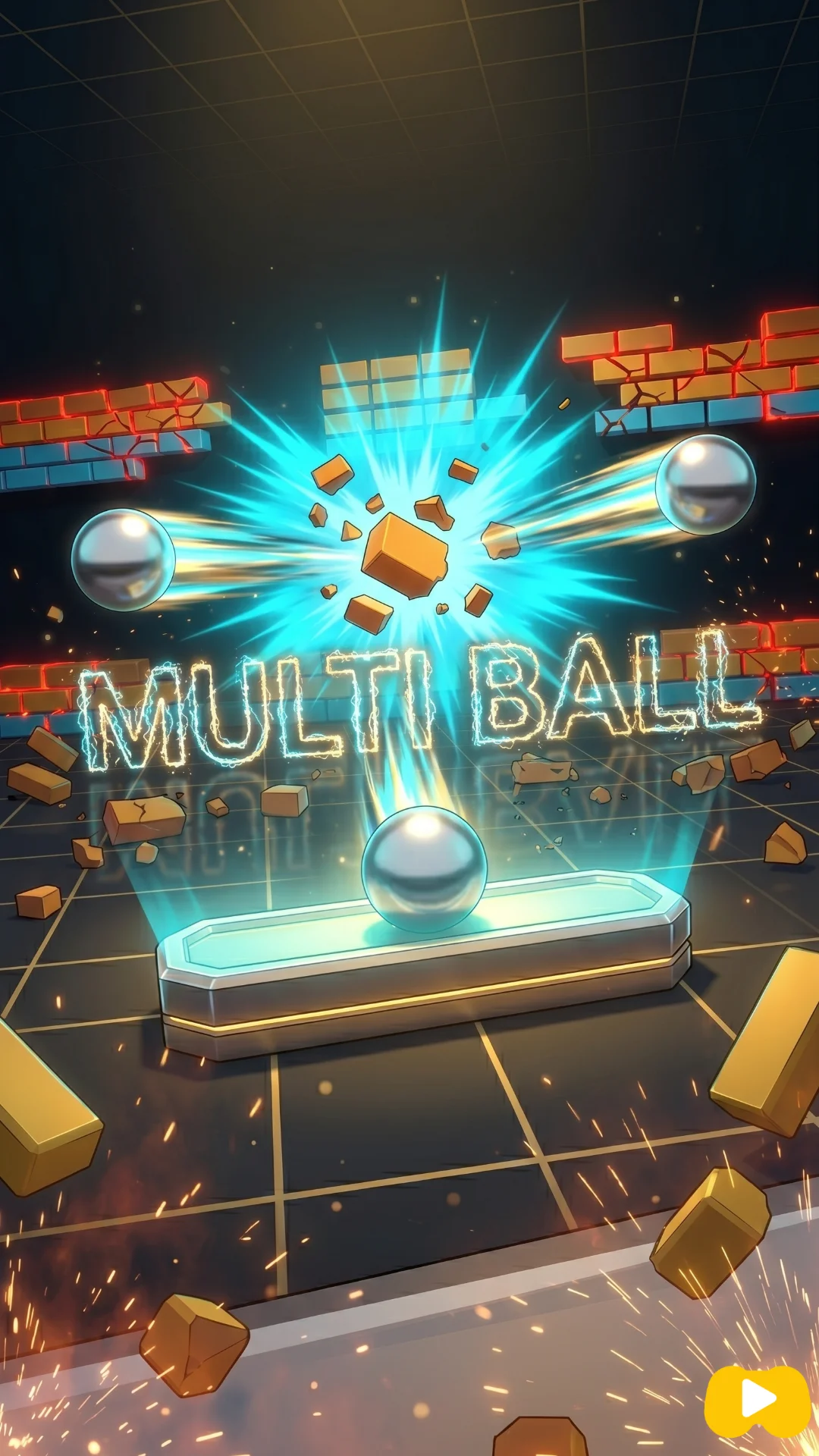
About one brick in eight drops a capsule, with at most two falling at once: a wider paddle, a slower ball, or a split into extra balls. That is the whole feature list. A good run takes a few minutes, and it is deliberately not trying to be more than a clean version of something you already know how to play.
What is different about this version
Speed belongs to the level, not to the rally. Most games in this shape wind the ball up as you break things, so a long rally gets progressively harder to control and a fresh board feels easy; here the pace is set the moment the level starts and does not move until the board is clear. It rewards settling in rather than surviving a ramp.
The paddle also contributes nothing but position. The rebound comes purely from where the ball lands on it — dead centre goes straight up, the outer edge leaves at sixty degrees — and sliding the paddle at the moment of contact adds nothing. There is no spin to learn and no way to save a bad position with a late flick. Multi-ball also stops being offered once four balls are already live.
How to play Ball Breaker
- Move the paddle and launch the ball to begin the level.
- Break bricks. The point of the paddle you catch the ball on sets the angle it leaves at.
- Clear every brick to move up a level, which adds a row and raises the ball's speed.
- You only lose a life when the last ball on screen gets past you.
Controls
| Desktop | Move the paddle with the mouse or the left and right arrow keys, and click or press Space to launch. |
|---|---|
| Phone or tablet | Drag anywhere to slide the paddle and tap to launch. |
| Players | One player. Any other characters on screen are run by the game. |
Strategy
Contact point is your only steering, so treat the paddle as a dial rather than a net. The offset from the middle maps directly onto the angle, right up to sixty degrees at the edge, which means every catch is a decision about where the ball goes next. Most players lose levels not because they missed but because they kept catching dead centre and sent the ball back up the same narrow column until the rally ran out.
That also makes the wide paddle capsule a mixed blessing. It gives you more margin for error, but because the angle is measured as a fraction of the paddle's half-width, the same physical offset now produces a shallower bounce. A wide paddle is easier to survive with and harder to aim with. Take it when you are struggling to keep up; do not take it when you are trying to pick off two stubborn bricks in a top corner.
The scoring says where your attention belongs. Bricks pay ten times the level number, and the boards get bigger as you go, so a level-six board is worth many times what level one was — which means an early life spent forcing a fast clear is almost always cheaper than a cautious level one. Get the ball above the wall if you can: the two-hit rows sit at the top, they are the slowest to reach from the paddle, and a ball loose behind the bricks works through them far faster than you can from below. Grab multi-ball on a full board, where the extra balls have plenty to hit, and save the slow capsule for a nearly empty one where you are hunting stragglers.
Mistakes that cost you the game
- Catching everything in the middle of the paddle, which sends the ball back up the same column and never opens a route into the rows that matter.
- Chasing a capsule across the screen and losing the ball for it. Twelve seconds of a wider paddle is not worth a third of your run.
Tips
- Aim with the paddle edges on purpose once only a few bricks are left.
- Open a channel up one side early and let the ball loose above the wall.
- When multi-ball is live you only lose a life if every ball goes, so it is worth using the spare balls aggressively rather than trying to shepherd all of them.
Questions about Ball Breaker
Does the ball get faster as I break bricks?
No. Speed is set by the level and stays constant until the board is cleared, then steps up for the next one.
What do the capsules do?
There are three: a wider paddle for twelve seconds, a ball slowed to about two-thirds speed for ten, and a split into extra balls. Roughly one brick in eight drops one, and only two can be falling at a time.
Why do some bricks survive a hit?
The top two rows of every board take two hits. They are always the last part of the wall left standing.
Does it cost anything?
No. Ball Breaker is free to play, runs in your browser, and needs no download, install or account.
More games like this
-
 Space Rock BreakerSplitting rocks on a wrapping screen, where the smallest fragments are worth the most
-
 Pixel SnakeFourteen by fourteen, edges that wrap, and nothing to kill you but yourself
-
 Alien Ship AssaultSixty seconds, fourteen aliens, and a walk back to the pad you landed on
-
 5 vs 10Draughts fought with gold five-coins against teal ten-coins, every capture forced